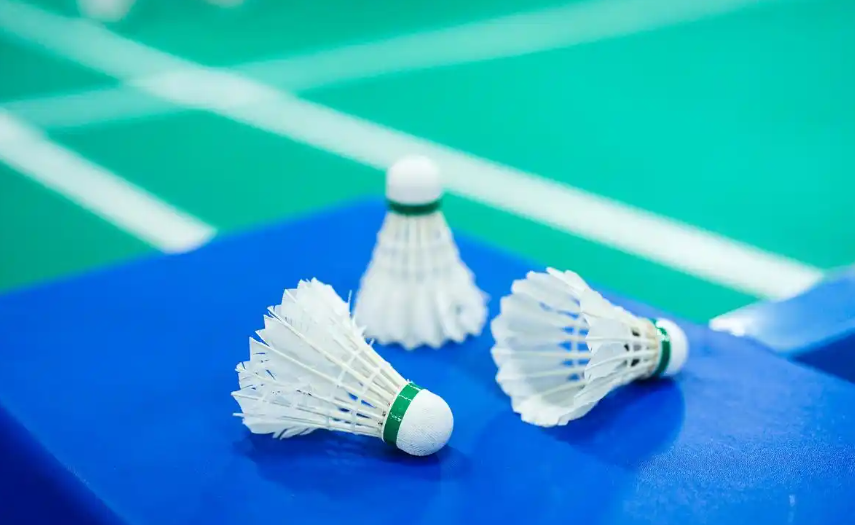
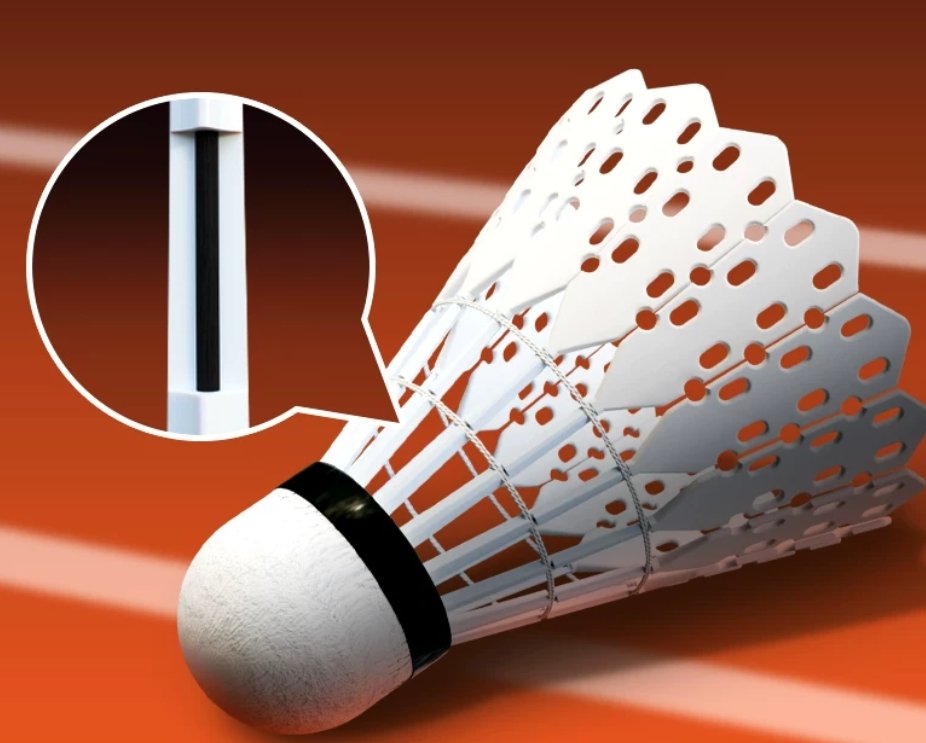
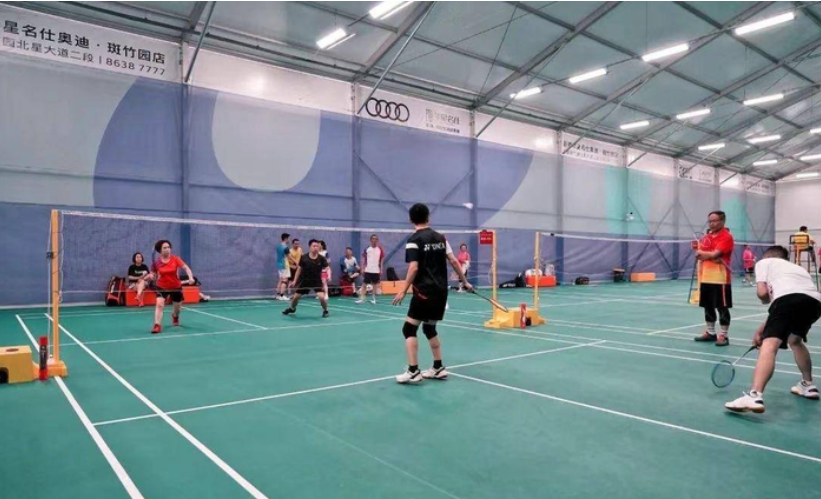
A feather shuttlecock may look perfect on the outside, but appearance alone cannot prove its speed or flight stability.
Before shipment, professional shuttlecock factories need to test whether each shuttlecock flies at the correct speed and whether it stays stable in the air. This is why speed testing and wobble inspection are important steps in the shuttlecock manufacturing process.
For club players, distributors, and private label badminton brands, these tests directly affect the final playing experience. A shuttlecock that is too fast, too slow, or unstable in flight will quickly lead to complaints, even if the feathers and cork base look clean.
This article explains how shuttlecock speed testing works inside a factory, why wobble inspection matters, and how different speed grades are sorted before packing.
Why Shuttlecock Speed Testing Is Necessary
In badminton, shuttlecock speed is not just a printed number on the tube. It affects every rally.
If the shuttlecock is too fast, clears and lifts may travel too far. Players may feel that the shuttlecock is difficult to control. If it is too slow, the shuttlecock may fall short, making rallies feel heavy and uncomfortable.
This is why most medium-to-high-grade feather shuttlecocks are tested before shipment. Very low-end training shuttlecocks may not always go through the same level of testing, but for club-grade, tournament-grade, and OEM shuttlecock orders, speed control is an essential quality step.
A professional OEM shuttlecock manufacturer usually checks speed to ensure:
- each batch matches the required speed grade
- tubes from the same order perform consistently
- unstable shuttlecocks are removed or adjusted
- buyers receive products suitable for their market conditions
For private label shuttlecock brands, this process is especially important. Their customers do not only care about price. They expect every tube to feel close to the last one.
How Shuttlecock Speed Is Tested in the Factory
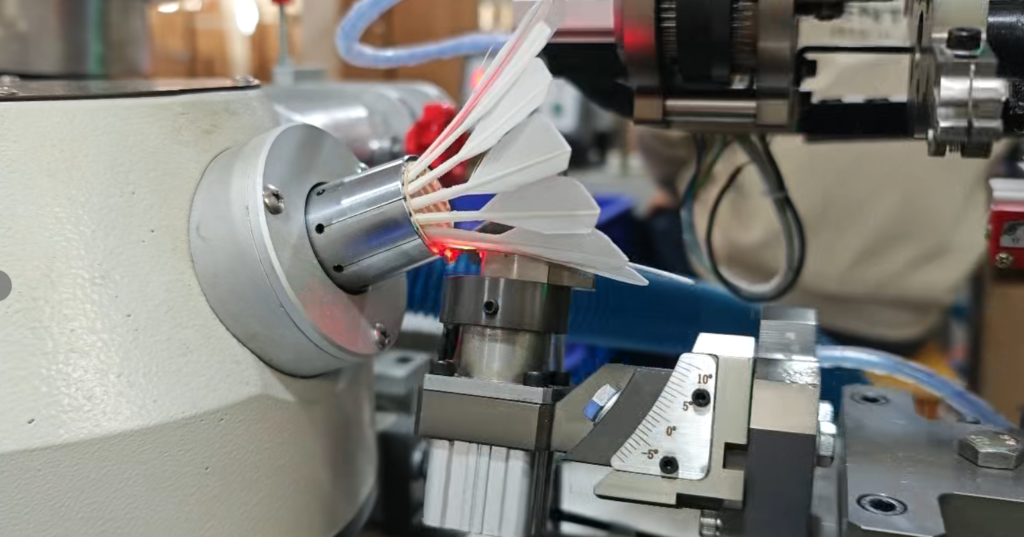
In the factory, shuttlecock speed testing is usually done with a dedicated speed testing setup.
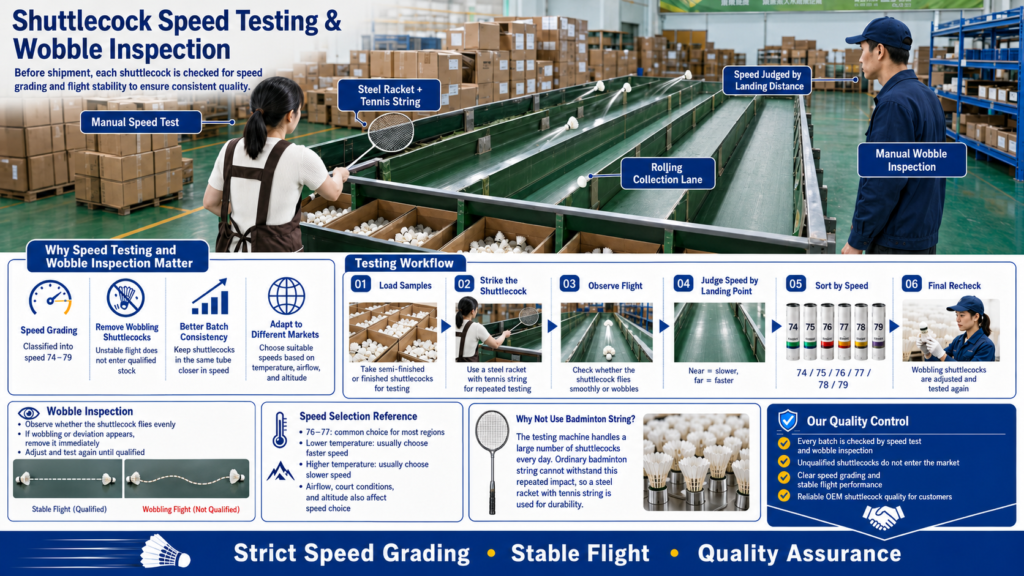
The shuttlecock is placed into the testing area. A mechanical hitting device or trained worker strikes the shuttlecock forward. In some factory systems, the testing device uses a steel racket fitted with tennis string instead of ordinary badminton string.
This detail often surprises people.
The reason is simple: a speed testing machine may need to hit thousands of shuttlecocks every day. Ordinary badminton string is not designed for that level of repeated impact. Tennis string and stronger racket structures are more durable for high-frequency factory testing.
After the shuttlecock is hit, it flies forward into a long testing lane or rolling collection area. Workers then judge the speed according to the landing distance.
The basic principle is easy to understand:
- the closer the shuttlecock lands, the slower the speed
- the farther it lands, the faster the speed
This allows the factory to separate shuttlecocks into different speed grades.
Why Landing Distance Shows Shuttlecock Speed
A feather shuttlecock slows down quickly because of air resistance. The feather skirt creates drag, which gives the shuttlecock its unique flight curve.
When a shuttlecock is hit under similar testing conditions, its landing distance reflects its speed level.
A faster shuttlecock will travel farther before landing. A slower shuttlecock will drop earlier.
This distance is affected by several factors:
- feather shape
- feather stiffness
- cork weight
- total shuttlecock weight
- cone angle
- glue and thread structure
- air temperature
- airflow inside the testing area
That is why speed testing is not just about hitting the shuttlecock once. It is about checking whether the finished shuttlecock matches the intended speed category after the full manufacturing process is complete.
Common Shuttlecock Speed Grades: 74 to 79
Feather shuttlecocks are commonly sorted into speed grades such as 74, 75, 76, 77, 78, and 79.
Different markets require different speeds because playing conditions vary.
In many regions, speed 76 and 77 are the most commonly used. They are suitable for a wide range of indoor badminton conditions.
However, the correct speed depends on local factors such as:
- temperature
- humidity
- altitude
- indoor airflow
- court environment
- player preference
In colder conditions, players often need a faster shuttlecock because the shuttlecock tends to fly shorter. In warmer conditions, a slower shuttlecock may be more suitable because the shuttlecock can travel farther.
At higher altitudes, shuttlecocks often fly faster due to thinner air, so a slower speed may be required. In humid conditions, shuttlecock durability and flight can also change.
This is why experienced buyers should not choose speed only by habit. They should select the speed that matches their local playing environment.
What Is Wobble Inspection?
Speed is only one part of shuttlecock quality. Flight stability is equally important.
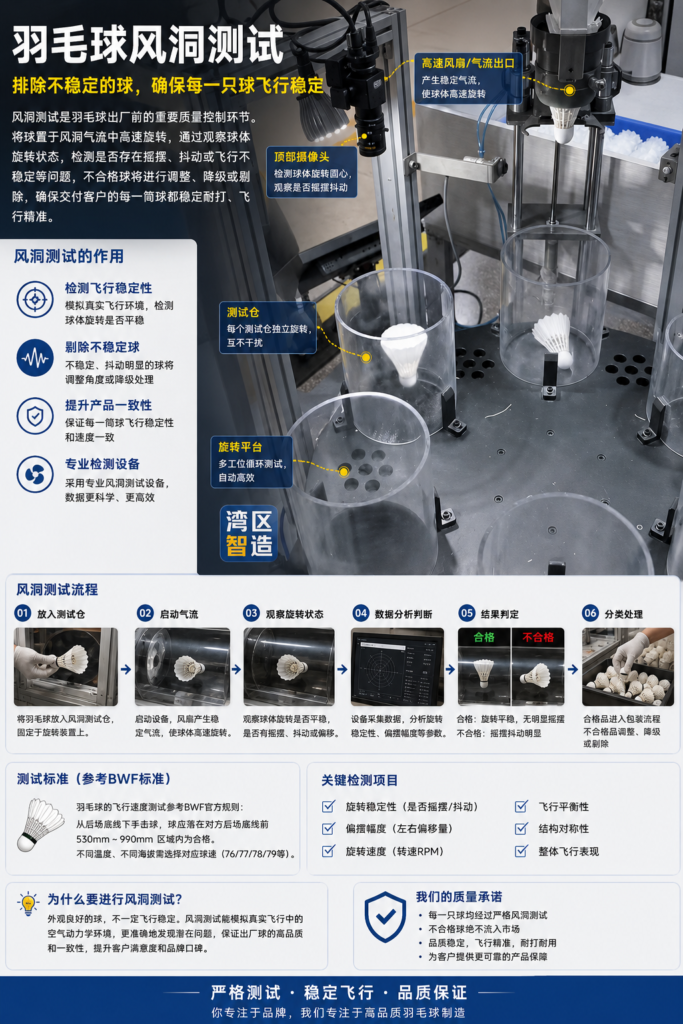
During testing, workers also observe whether the shuttlecock flies smoothly or wobbles in the air.
A stable shuttlecock should rotate evenly and move forward with a clean flight path. If the shuttlecock shakes, swings, or deviates noticeably, it may be considered unstable.
This is commonly called wobble inspection.
In many factories, wobble inspection is still done by human eyes because experienced workers can quickly identify abnormal flight behavior. They watch the shuttlecock during the flight and judge whether it is stable enough to enter qualified stock.
If a shuttlecock wobbles clearly, it should not be allowed to fall into the normal speed sorting lane. Workers may hit it out, remove it, or send it for adjustment.
Why Shuttlecocks Wobble During Flight
A wobbling shuttlecock usually means the structure is not balanced.
Common causes include:
Uneven Feather Curvature
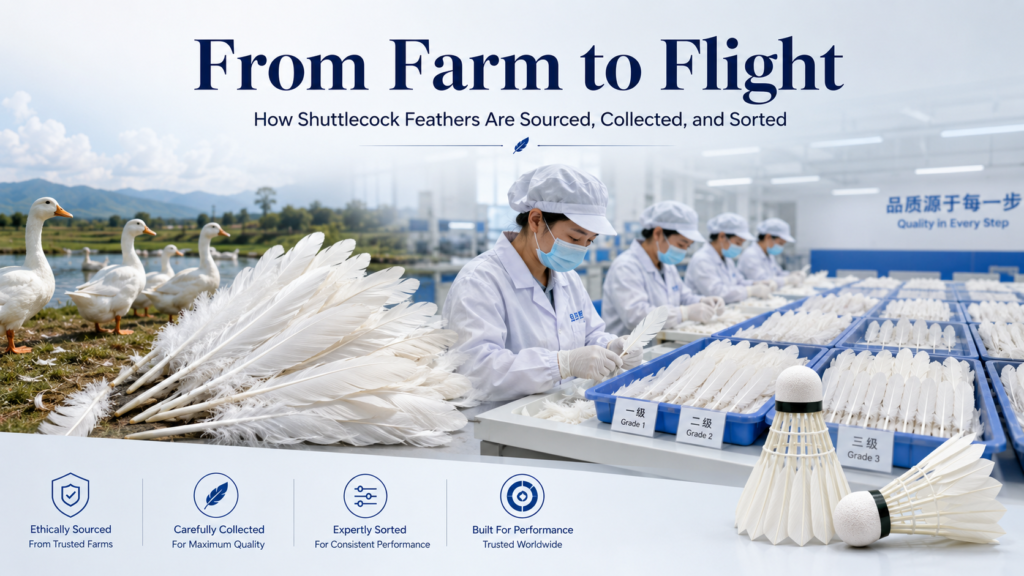
The 16 feathers must have similar curvature. If one feather bends differently from the others, airflow becomes uneven.
Poor Feather Angle
If feathers are inserted at slightly different angles, the cone structure may become unbalanced.
Inconsistent Feather Thickness
Different shaft thickness can affect stiffness and rotation.
Uneven Glue Weight
Too much glue on one side can change balance.
Thread Binding Problems
If the thread tension is uneven, the feather skirt may shift during flight.
Cork Base Variation
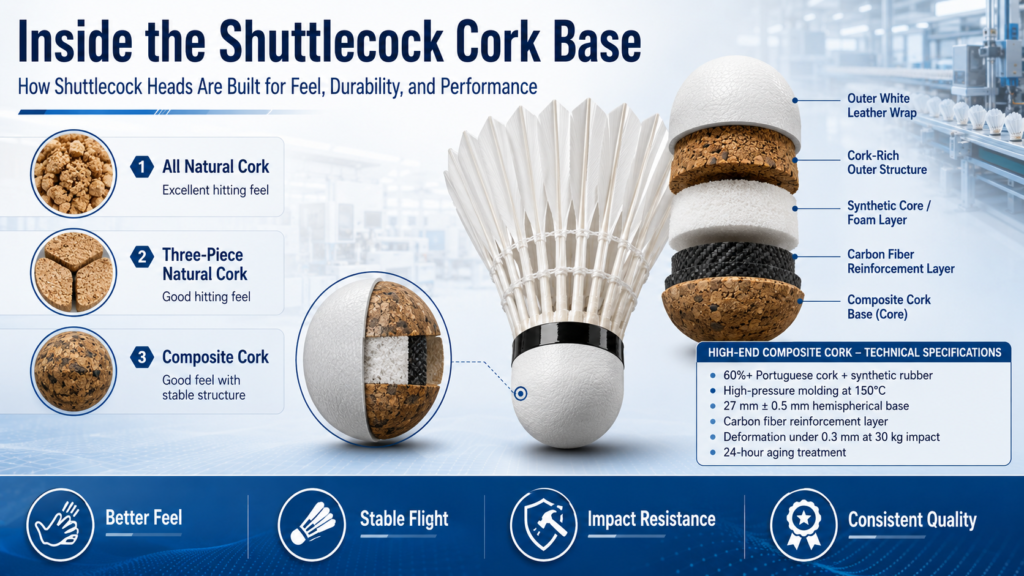
The cork base must have consistent weight and shape. If the head is not balanced, the shuttlecock may not fly straight.
A good factory controls these problems throughout production, not only at the final testing stage.
What Happens to Wobbling Shuttlecocks?
Not every wobbling shuttlecock is immediately thrown away.
Some may be adjusted and tested again.
For example, workers may check:
- feather alignment
- cone shape
- thread position
- damaged feathers
- glue condition
- base balance
If the problem can be corrected, the shuttlecock may return to the testing process and become a qualified product after rechecking.
If the problem cannot be corrected, it may be downgraded or removed from qualified stock.
This is an important part of quality control. A professional factory should not allow unstable shuttlecocks to enter normal packaging simply because the appearance is acceptable.
Speed Sorting After Testing
After speed testing, qualified shuttlecocks are separated by speed grade.
For example, shuttlecocks may be sorted into:
- speed 74
- speed 75
- speed 76
- speed 77
- speed 78
- speed 79
This sorting helps ensure that each tube contains shuttlecocks with similar performance.
Without proper speed sorting, a buyer may receive one tube where some shuttlecocks fly too fast and others fly too slow. This creates a poor playing experience and damages brand trust.
For OEM shuttlecock orders, speed sorting also helps match different markets. A buyer in one country may request speed 77, while another buyer may need speed 76 or 78 depending on climate and playing conditions.
Why Rechecking Is Important
After speed sorting, shuttlecocks should be checked again before final packing.
This second inspection helps confirm:
- speed classification is correct
- wobbling shuttlecocks have been removed
- appearance is acceptable
- feather structure is stable
- tubes are packed with consistent speed
- the batch meets the buyer’s requirement
This step may sound simple, but it is one of the reasons why good factories have fewer complaints.
A single unstable shuttlecock in a tube can affect customer perception. For serious clubs and distributors, consistency matters more than one perfect sample.
Why Testing Uses a Strong Racket and Tennis String
In normal badminton play, players use badminton rackets and badminton string. But factory testing is different.
A testing setup may need to strike a huge number of shuttlecocks every day. Ordinary badminton string cannot withstand that repeated workload for long. It may break too often and make testing inefficient.
That is why some factories use a stronger steel racket structure with tennis string for repeated speed testing.
This setup is not meant to copy normal playing equipment exactly. It is designed to create a durable and repeatable testing method for factory production.
The goal is not to measure player feel. The goal is to classify shuttlecock speed and remove unstable products efficiently.
Why Speed Testing Matters for OEM Buyers
When buyers choose an OEM shuttlecock manufacturer, they often ask about feather type, cork base, price, MOQ, and packaging. These are important, but final testing is just as important.
Two shuttlecocks may use similar goose feathers and similar cork bases, but if one factory performs strict speed testing and another does not, the final consistency can be very different.
Before placing a bulk order, buyers should ask:
- Does the factory test shuttlecock speed before shipment?
- How are different speeds sorted?
- How is wobble checked?
- What happens to unstable shuttlecocks?
- Are samples tested under the same standard as bulk production?
- Can the factory provide speed 76, 77, 78, or other required speeds?
These questions help buyers understand whether the factory has real quality control, not just production capacity.
Speed Selection for Different Markets
Choosing the right shuttlecock speed is not the same for every country.
A buyer should consider:
- local temperature
- indoor court conditions
- altitude
- humidity
- player level
- common market preference
For many markets, speed 76 and 77 are safe choices. However, this is not a fixed rule.
A distributor selling to colder regions may need faster shuttlecocks. A buyer in a warmer or high-altitude region may need slower ones.
This is why communication with the factory matters. A good supplier should help buyers choose suitable speed based on real market conditions.
The Difference Between Testing and Real Play
Factory speed testing helps classify shuttlecock speed, but buyers should still test samples on court.
Factory testing focuses on:
- speed grade
- landing distance
- visible wobble
- batch sorting
- consistency before shipment
Court testing helps evaluate:
- real hitting feel
- durability during rallies
- flight comfort
- player feedback
- performance under local conditions
For private label brands, both are necessary. Factory testing ensures production consistency. Court testing confirms market suitability.
Final Thoughts
Speed testing and wobble inspection are essential steps in professional feather shuttlecock manufacturing.
The process helps factories separate shuttlecocks by speed grade, remove unstable products, and ensure that every qualified shuttlecock performs consistently before shipment.
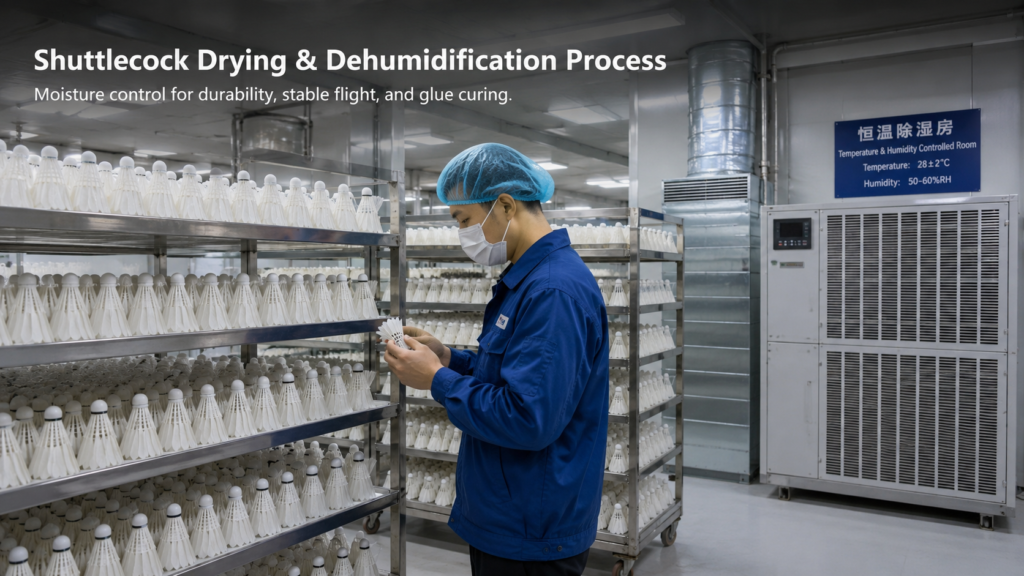
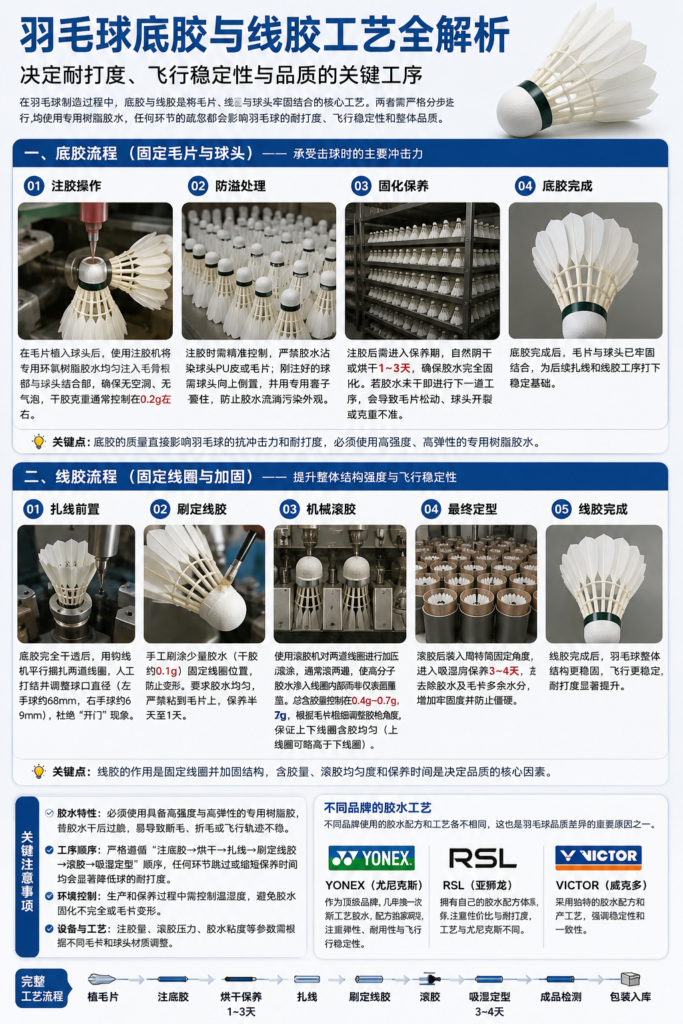
A good shuttlecock is not only made from selected feathers and a solid cork base. It also needs proper feather insertion, gluing, thread binding, drying, speed testing, wobble inspection, and final rechecking.
For OEM shuttlecock buyers, this testing process is one of the clearest signs of a reliable manufacturer.
If you are sourcing feather shuttlecocks for clubs, distributors, sports brands, or private label projects, do not ask only about price. Ask how the factory tests speed, removes wobbling shuttlecocks, and sorts each batch before packing.
Because stable flight is not promised by words. It is proven by testing.