Before a feather shuttlecock leaves the factory, it must go through several quality control steps. Feathers may look clean, the cork base may feel solid, and the packaging may be well printed — but none of these can fully prove how the shuttlecock will fly.
For an OEM shuttlecock manufacturer, the most important question is simple:
Will this shuttlecock fly straight, rotate smoothly, and perform consistently during play?
This is why professional feather shuttlecock factories use flight testing, speed testing, and in some production systems, wind tunnel testing to check shuttlecock stability before shipment.
Among these methods, the shuttlecock wind tunnel test is especially useful for detecting wobbling, shaking, poor rotation, and balance problems that may not be visible by appearance alone.
Why Factory Testing Matters Before Shipment
A feather shuttlecock is a highly sensitive product. It is made from 16 natural feathers, a cork base, glue, thread, and leather or PU wrapping. Even if all components meet basic standards, small differences in feather angle, weight, curvature, or glue distribution can affect flight.
Common problems include:
wobbling during flight
unstable rotation
inconsistent speed
drifting left or right
poor balance
short durability
uneven cone shape
For badminton clubs, distributors, and private label brands, these problems can quickly lead to customer complaints.
This is why final inspection is not just a formality. It is the last opportunity for the factory to identify unstable shuttlecocks before packing and shipment.
What Is a Shuttlecock Wind Tunnel Test?
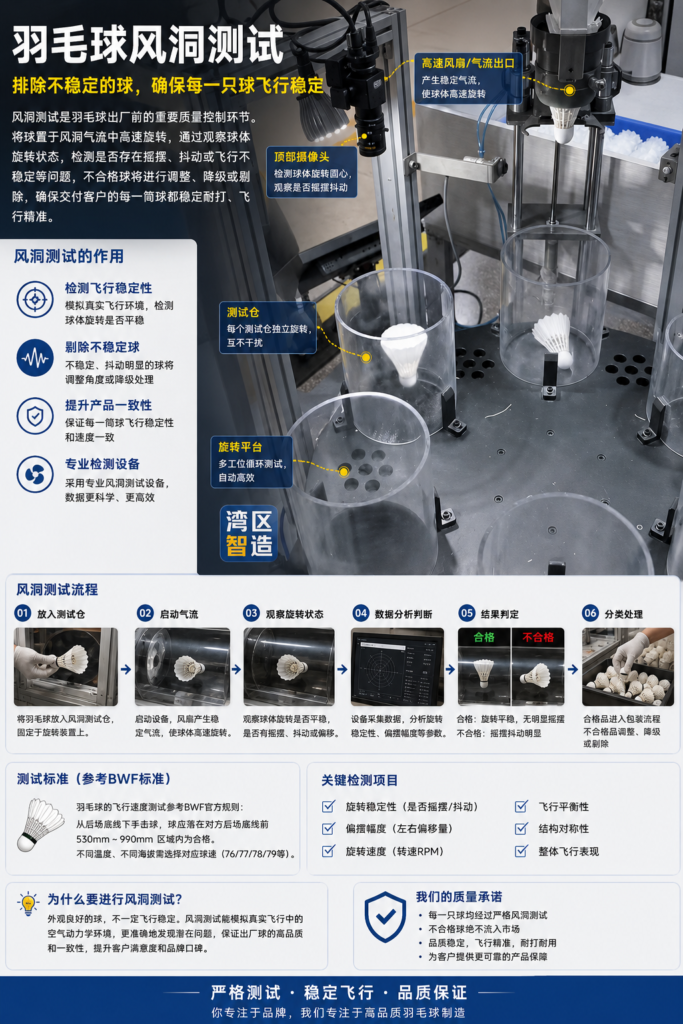
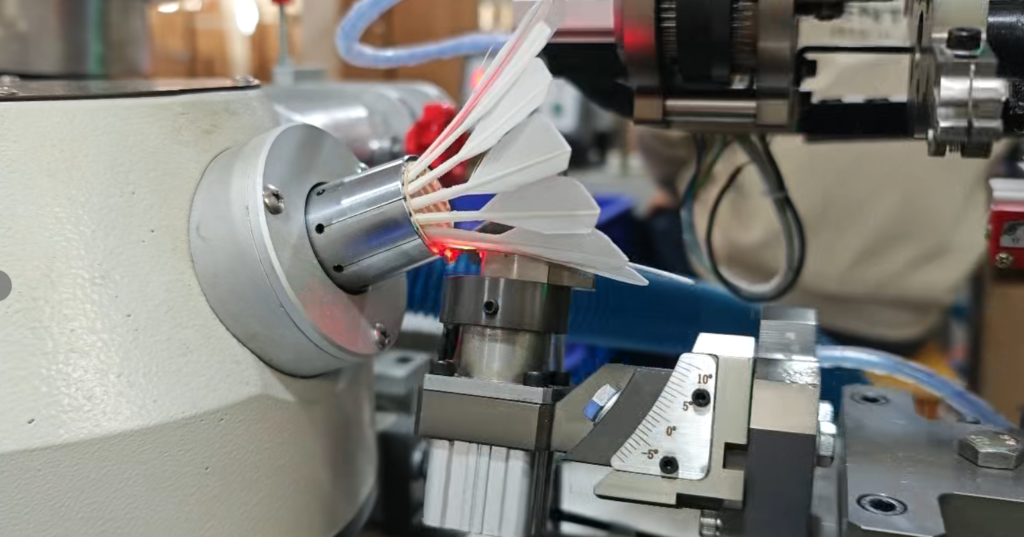
A shuttlecock wind tunnel test is a quality control method used to observe how a shuttlecock behaves under controlled airflow.
In simple terms, the shuttlecock is placed in a wind tunnel or airflow testing machine. Air moves around the shuttlecock and makes it rotate. Workers or testing equipment observe whether the shuttlecock spins smoothly or shows abnormal shaking.
The test helps check:
rotation balance
feather alignment
cone symmetry
aerodynamic stability
shaking or wobbling
obvious structural defects
A stable shuttlecock should rotate smoothly and maintain a balanced position under airflow. If the shuttlecock shakes badly, wobbles, or rotates unevenly, it may need adjustment, reinspection, downgrade, or rejection.
Why Wind Tunnel Testing Is Useful for Feather Shuttlecocks
Feather shuttlecocks depend on airflow.
After impact, the cork base leads the flight while the feather skirt creates drag and stabilizes the shuttlecock. The shuttlecock rotates as it travels, and this rotation helps maintain a stable flight path.
If the feather structure is not balanced, the shuttlecock may not rotate properly.
Wind tunnel testing is useful because it reveals problems related to:
uneven feather spacing
inconsistent feather curvature
poor insertion angle
unbalanced glue weight
crooked cone shape
damaged feather stems
inaccurate trimming
Some of these issues are difficult to identify only by looking at the shuttlecock on a table. Under airflow, however, unstable pieces become much easier to spot.
What Causes Wobbling in a Shuttlecock?
Wobbling is one of the most common signs of poor shuttlecock quality.
A shuttlecock may wobble because of several reasons.
1. Uneven Feather Curvature
All 16 feathers should have similar curvature. If one or two feathers bend differently, the airflow around the shuttlecock becomes uneven.
2. Poor Feather Insertion Angle
If feathers are not inserted at the correct angle, the cone structure becomes unbalanced. This can cause shaking during rotation.
3. Inconsistent Feather Thickness
Different feather shaft thickness can affect stiffness and airflow response.
4. Glue Imbalance
If too much glue is applied to one side, the shuttlecock may become slightly unbalanced.
5. Thread Binding Problems
If the thread tension is uneven, the feather cone may deform during flight.
6. Cork Base Weight Difference
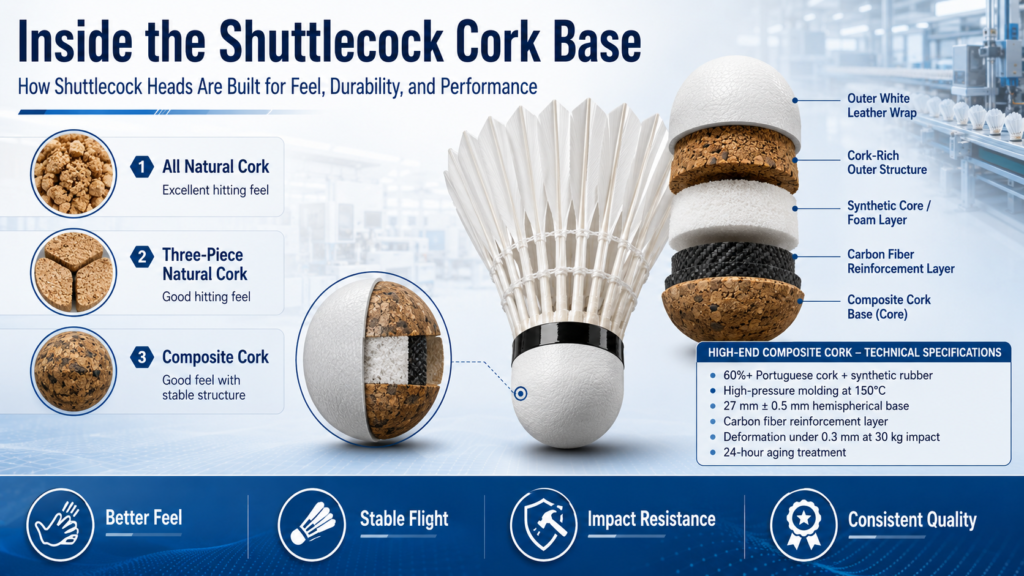
The cork base must have stable weight and shape. A poor base can affect flight balance even if the feathers are good.
This is why shuttlecock testing must consider the full structure, not only feather appearance.
Wind Tunnel Test vs Court Flight Test
Wind tunnel testing and court flight testing are different, but both are valuable.
Wind Tunnel Test
The wind tunnel test is mainly used to check rotation stability and balance under controlled airflow.
It helps identify:
wobbling
shaking
unbalanced rotation
poor feather alignment
structural instability
This test is especially useful during factory quality control because it can quickly screen unstable shuttlecocks.
Court Flight Test
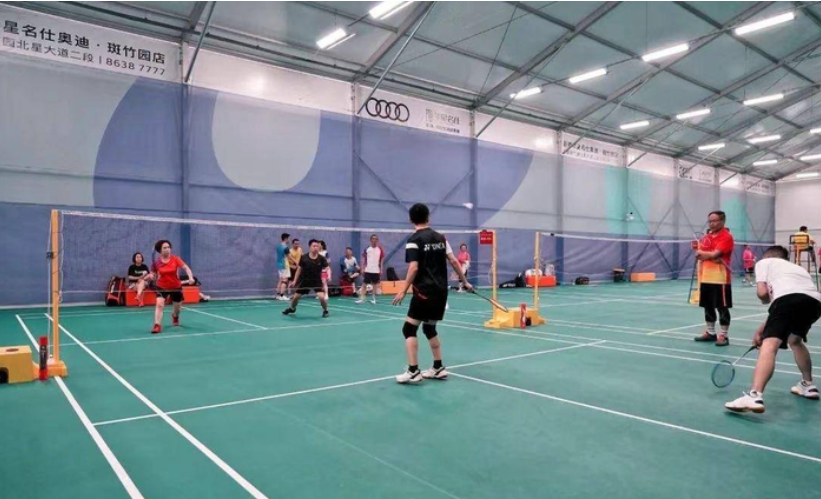
The court flight test checks how the shuttlecock performs in real hitting conditions.
It helps evaluate:
speed
distance
trajectory
player feel
deceleration
real match performance
For higher-grade shuttlecocks, both types of testing are important. The wind tunnel test helps identify structural balance problems, while court testing confirms actual playing performance.
Shuttlecock Speed Testing Before Shipment
Besides wind tunnel testing, shuttlecock speed testing is also important.
Different markets require different shuttlecock speeds. Common speeds include:
speed 76
speed 77
speed 78
speed 79
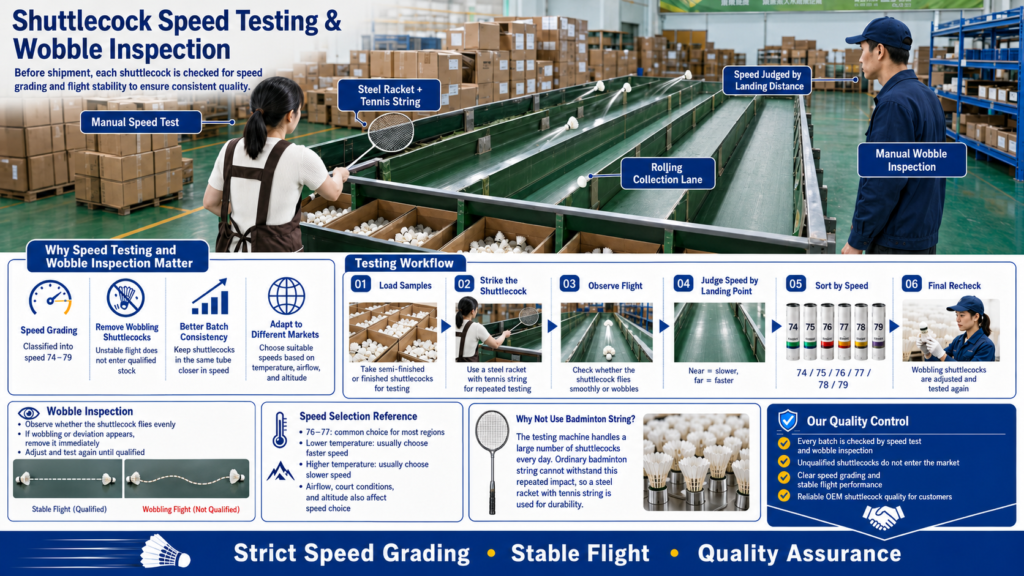
Speed choice depends on temperature, altitude, humidity, and local playing habits.
For example:
colder conditions often require faster shuttlecocks
warmer conditions often require slower shuttlecocks
higher altitude may require slower shuttlecocks
humid environments may affect flight and durability
Before shipment, factories may test speed by hitting shuttlecocks and checking the landing distance. This helps confirm whether the shuttlecock matches the buyer’s required speed.
For OEM shuttlecock orders, speed consistency is very important because customers expect each tube and each batch to perform similarly.
Visual Inspection Before Wind Tunnel Testing
Before a shuttlecock enters wind tunnel or flight testing, workers usually perform visual inspection.
They check:
feather alignment
feather damage
cone shape
thread position
glue condition
cork base appearance
leather wrapping
trimming quality
overall symmetry
If a shuttlecock has obvious defects, it may be removed before testing.
Visual inspection is still important because wind tunnel testing should not replace basic workmanship control. It should confirm stability after the shuttlecock has already passed earlier quality checks.
How Factories Handle Unstable Shuttlecocks
If a shuttlecock performs poorly in the wind tunnel test, the factory may take different actions depending on the problem.
Adjustment
If the issue is minor, workers may adjust feather angle, cone shape, or thread position.
Reinspection
After adjustment, the shuttlecock may be tested again to confirm whether the problem has been corrected.
Downgrade
If the shuttlecock is still usable but does not meet the original grade standard, it may be downgraded to a lower product level.
Rejection
If the flight is clearly unstable or the structure is defective, the shuttlecock should be rejected.
This grading process helps protect product consistency, especially for club-grade, tournament-grade, and private label OEM shuttlecock orders.
Why Wind Tunnel Testing Matters for OEM Shuttlecock Buyers
OEM buyers often compare shuttlecocks by price, feather type, cork base, and packaging. These are important, but they do not tell the full story.
A shuttlecock can look good but still fly poorly.
Wind tunnel testing gives buyers more confidence because it shows whether the factory checks aerodynamic balance before shipment.
For private label brands, this matters even more. When customers complain about shuttlecocks, they rarely say “the feather insertion angle is wrong” or “the cone balance is poor.” They simply say:
the shuttlecock shakes
the shuttlecock does not fly straight
the speed feels inconsistent
the quality is unstable
A strong testing process helps reduce these complaints.
Key Quality Points Checked Before Shipment
A professional feather shuttlecock factory should check several quality points before packing.
1. Weight
The shuttlecock weight should stay within the required range.
2. Speed
The shuttlecock must match the target speed grade.
3. Flight Stability
The shuttlecock should rotate smoothly without obvious wobbling.
4. Feather Alignment
The 16 feathers should form a balanced cone.
5. Glue and Thread Strength
The feather roots and thread rings should remain firm.
6. Cork Base Quality
The head should be clean, stable, and properly wrapped.
7. Batch Consistency
Different tubes from the same order should perform consistently.
For OEM buyers, batch consistency is often more important than one perfect sample.
Why Stable Flight Requires Full Process Control
Wind tunnel testing is important, but it cannot fix a poor manufacturing process by itself.
Stable flight begins much earlier, including:
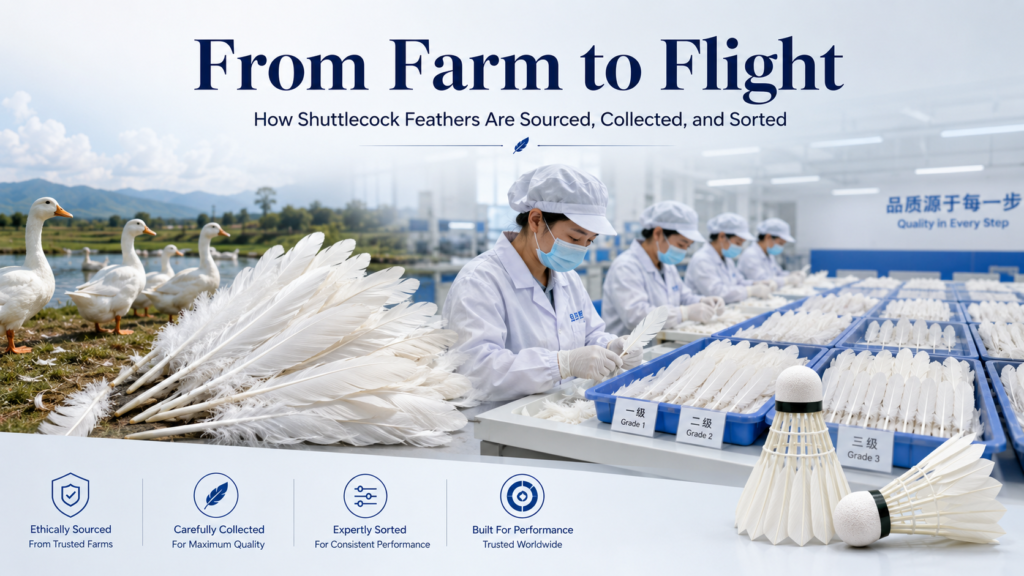
feather sourcing
feather sorting
feather grading
cork base preparation
feather insertion
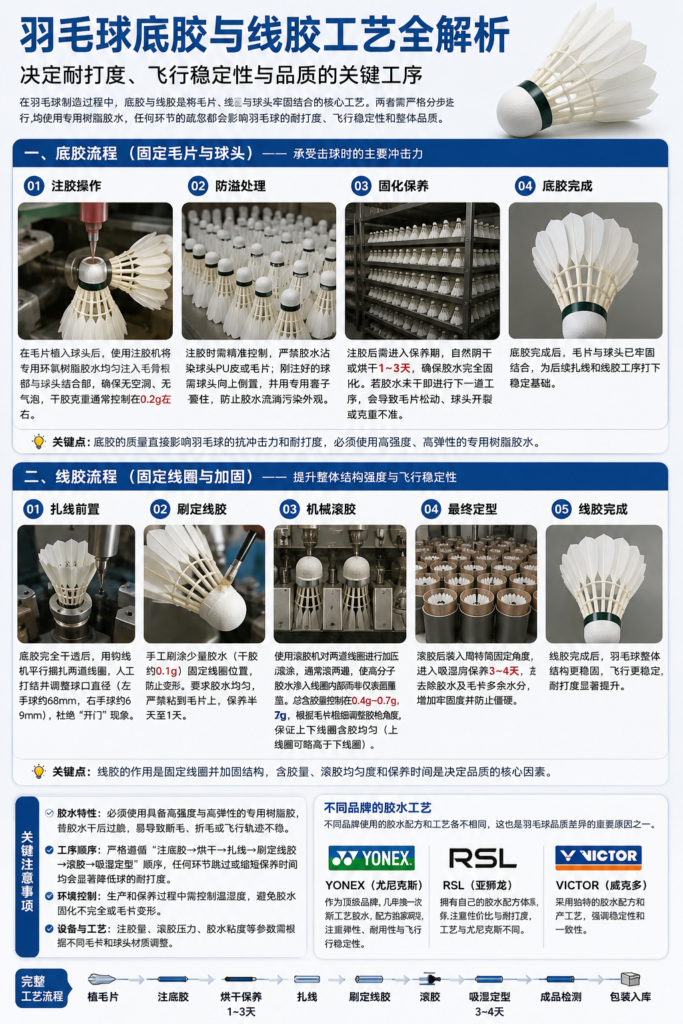
base glue
thread binding
thread glue
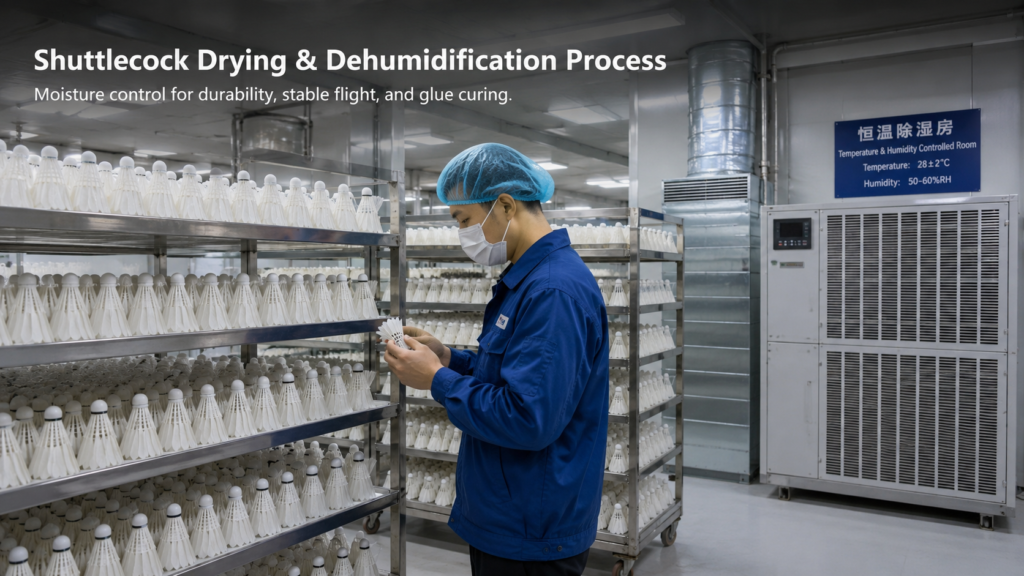
drying and dehumidification
final testing
If earlier steps are poorly controlled, many shuttlecocks will fail during final testing.
A reliable OEM shuttlecock manufacturer controls the full process from feather to flight.
What Buyers Should Ask Their Shuttlecock Supplier
Before placing an OEM shuttlecock order, buyers should ask more than just price.
Useful questions include:
Do you test flight stability before shipment?
Do you use wind tunnel testing or airflow testing?
How do you check shuttlecock speed?
What happens if a shuttlecock wobbles during testing?
Do you inspect feather alignment and cone shape?
How do you control batch consistency?
Can you provide samples for real court testing?
These questions help buyers identify whether a supplier has real quality control capability.
Final Thoughts
The shuttlecock wind tunnel test is an important quality control step in professional feather shuttlecock manufacturing.
It helps factories check whether a shuttlecock rotates smoothly, stays balanced, and avoids wobbling under airflow. Combined with visual inspection, speed testing, and court flight testing, it helps ensure that finished shuttlecocks meet the expectations of clubs, distributors, and private label brands.
For OEM shuttlecock buyers, final testing should never be ignored.
A good shuttlecock is not only made by good feathers. It is made by careful control of every step: feather selection, cork base preparation, insertion, gluing, binding, drying, and final aerodynamic testing.
If you are looking for a reliable OEM shuttlecock manufacturer, choose a factory that understands not only how to make shuttlecocks, but also how to test them before shipment.
Because stable flight is the final proof of good manufacturing.