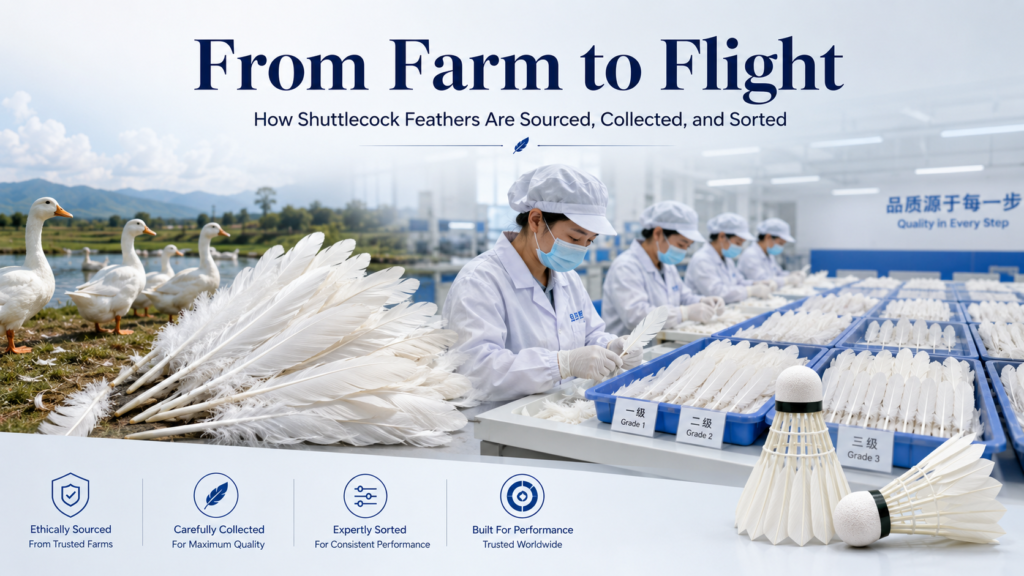
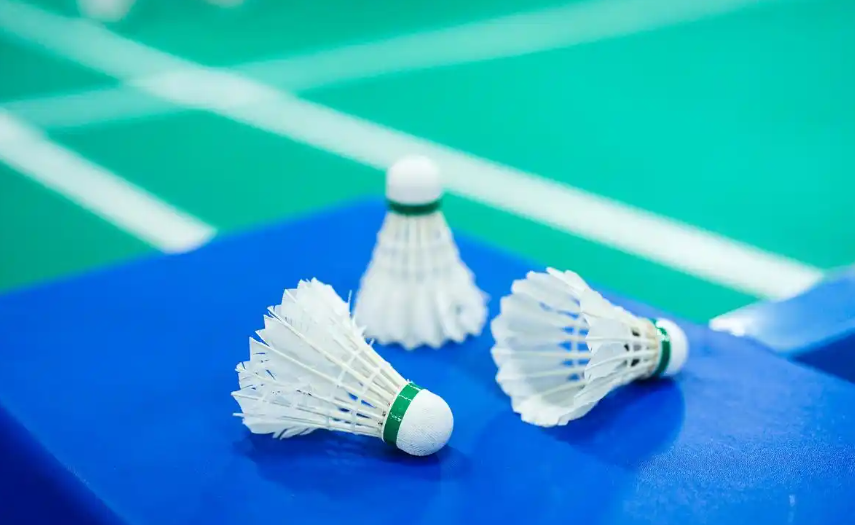
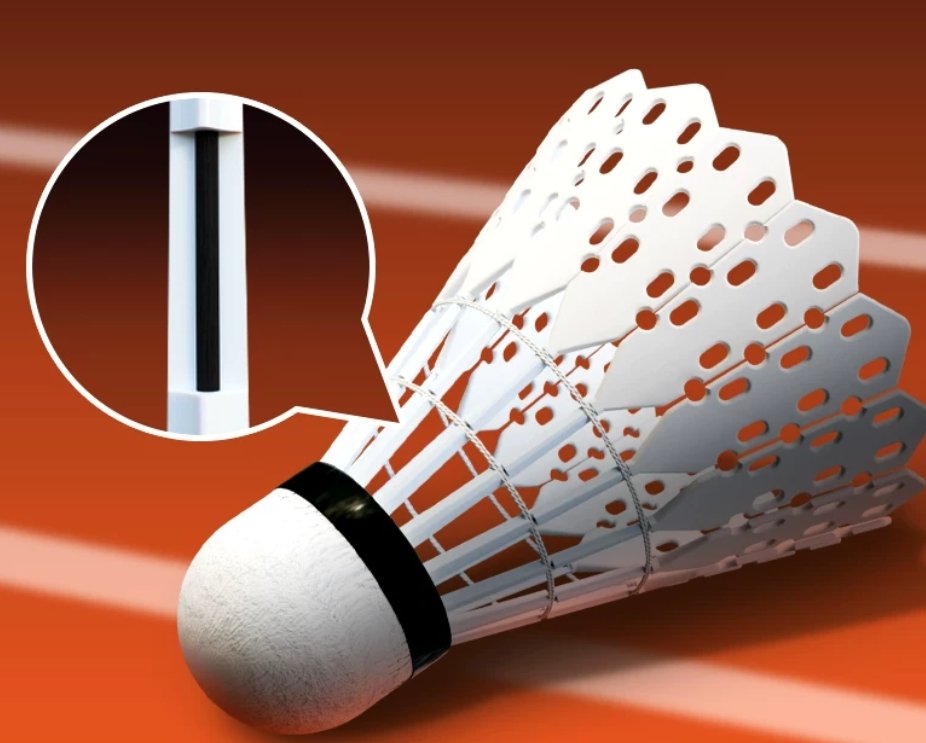
In the shuttlecock manufacturing process, feather selection is only the beginning. After the right goose feathers or duck feathers are selected, the next key step is feather insertion.
This is the stage where 16 feathers are inserted into the shuttlecock cork base and fixed into a stable cone structure. If the feathers are not inserted evenly, the shuttlecock may wobble, rotate poorly, lose speed control, or feel inconsistent during play.
For an OEM shuttlecock manufacturer, the feather insertion process is one of the most important steps that determines shuttlecock flight stability, durability, speed consistency, and final product quality.
What Is the Shuttlecock Feather Insertion Process?
A standard feather shuttlecock is made with 16 feathers. These feathers must be inserted into the cork base at equal spacing to form a balanced circular structure.
The base is prepared with 16 pre-set holes. Each hole matches one feather position. During insertion, the machine positions the cork base, guides the feather shaft, and inserts the feather into the correct hole.
This may look like a simple assembly step, but it requires accurate control of:
- feather angle
- insertion depth
- feather spacing
- feather curvature
- cone shape
- glue bonding
- thread binding
If any of these details are not controlled properly, the shuttlecock may not fly straight.
Why Feather Insertion Matters for Flight Stability
A feather shuttlecock flies through rotation. After the racket hits the cork base, the feather structure creates air resistance and controls the shuttlecock’s flight path.
For stable flight, all 16 feathers must work together as one balanced structure.
If one feather is inserted too deep, too shallow, too wide, or at a different angle, the shuttlecock may show problems such as:
- unstable rotation
- shaking during flight
- inconsistent speed
- poor durability
- uneven hitting feel
- faster feather damage
This is why professional shuttlecock manufacturing requires both good feather sorting and accurate feather insertion.
Good feathers alone are not enough. They must be inserted correctly.
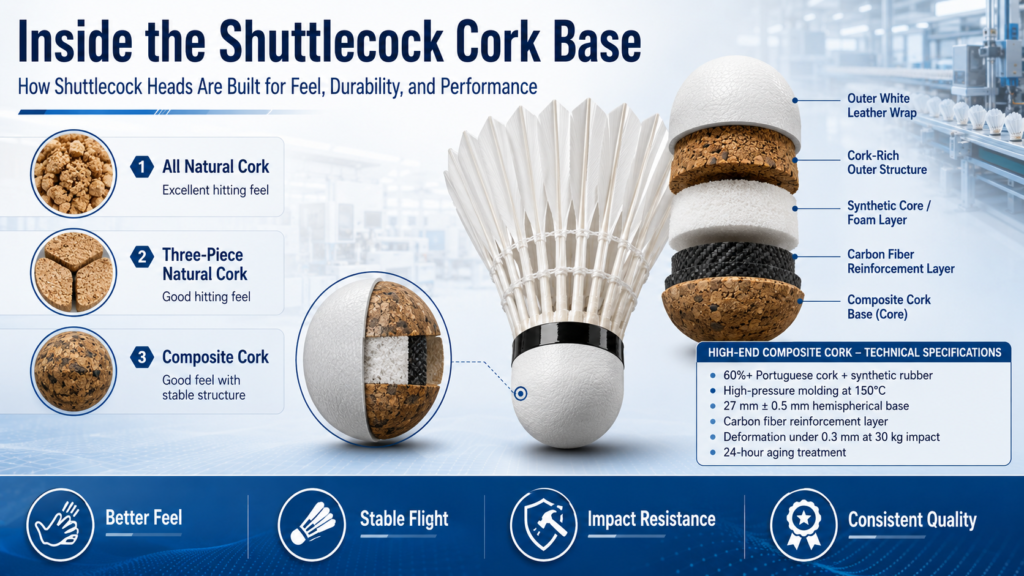
Step 1: Preparing the Pre-Drilled Cork Base
Before insertion, the shuttlecock head is prepared with 16 evenly distributed holes.
The cork base may be made from natural cork, three-piece cork, composite cork, or cork combined with synthetic foam. The outside is usually wrapped with white leather or leather-like material to create a smooth hitting surface.
The hole positions are important because they determine the foundation of the feather structure.
A good cork base should have:
- accurate hole spacing
- stable cork density
- clean drilled holes
- consistent head weight
- enough strength for glue bonding
If the base holes are uneven, the feathers will not form a balanced cone. Even high-quality feathers cannot fully correct a poorly prepared base.
Step 2: Matching Feathers Before Insertion
Before the feathers are inserted, they must be matched carefully.
A professional feather shuttlecock factory does not use random feathers in one shuttlecock. The 16 feathers should have similar:
- length
- curvature
- shaft thickness
- shaft strength
- surface quality
- left-wing or right-wing direction
Feather curvature is especially important.
If the feathers have different bending angles, the finished shuttlecock may look acceptable but fly poorly. This is why feather sorting is one of the most labor-intensive parts of badminton shuttlecock production.
For OEM shuttlecock buyers, this is a key quality point. A factory that cannot control feather matching will struggle to produce stable shuttlecocks in bulk.
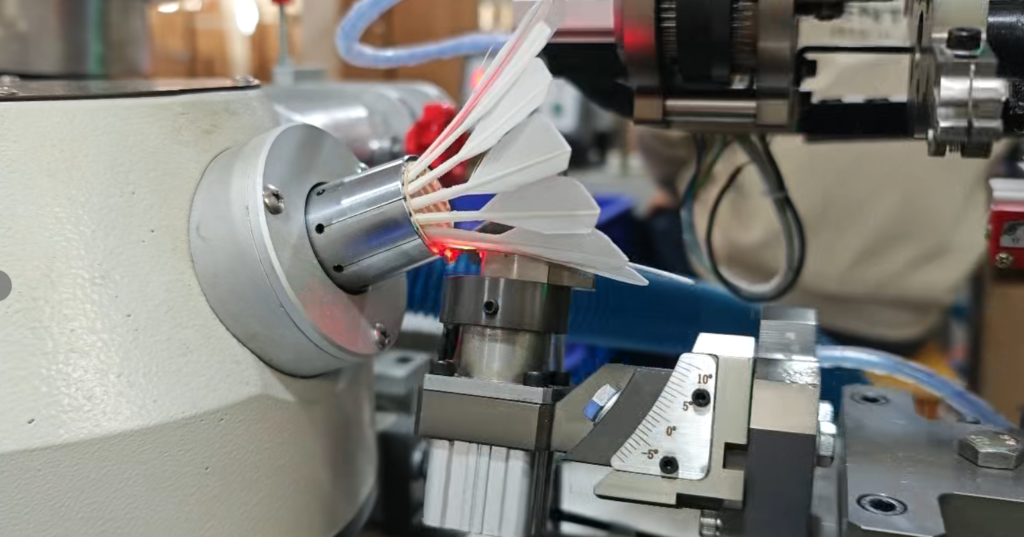
Step 3: Automatic Feather Insertion by Machine
In modern shuttlecock production, feather insertion is often completed by automatic or semi-automatic feather insertion machines.
The machine holds the cork base in a rotating fixture. As the base indexes position by position, selected feathers are inserted into the pre-set holes one by one.
This rotary positioning structure helps improve consistency compared with fully manual insertion.
The main advantages of automatic feather insertion include:
- more accurate feather positioning
- more consistent spacing
- better control of insertion depth
- higher production efficiency
- reduced human error
- more stable batch quality
In a standard 16-feather shuttlecock, each feather position is evenly distributed around the cork base. Since a full circle is 360 degrees, the theoretical spacing between feathers is 22.5 degrees.
This equal spacing helps the shuttlecock maintain balanced rotation during flight.
Step 4: Controlling Insertion Depth and Feather Angle
Insertion depth is another important technical point.
If the feather is inserted too shallow, it may loosen during play. If it is inserted too deep, the cone shape may be affected and the feather root may be stressed.
For high-quality shuttlecock production, the feather root must be firmly seated inside the cork base and glue area.
Good insertion control helps ensure:
- stronger feather fixation
- consistent cone angle
- stable feather spacing
- better durability
- more reliable flight performance
The feather angle also matters. All feathers need to form a uniform cone structure. A poor angle can affect air resistance and make the shuttlecock fly unevenly.
This is why the feather insertion machine must work together with careful material selection and final adjustment.
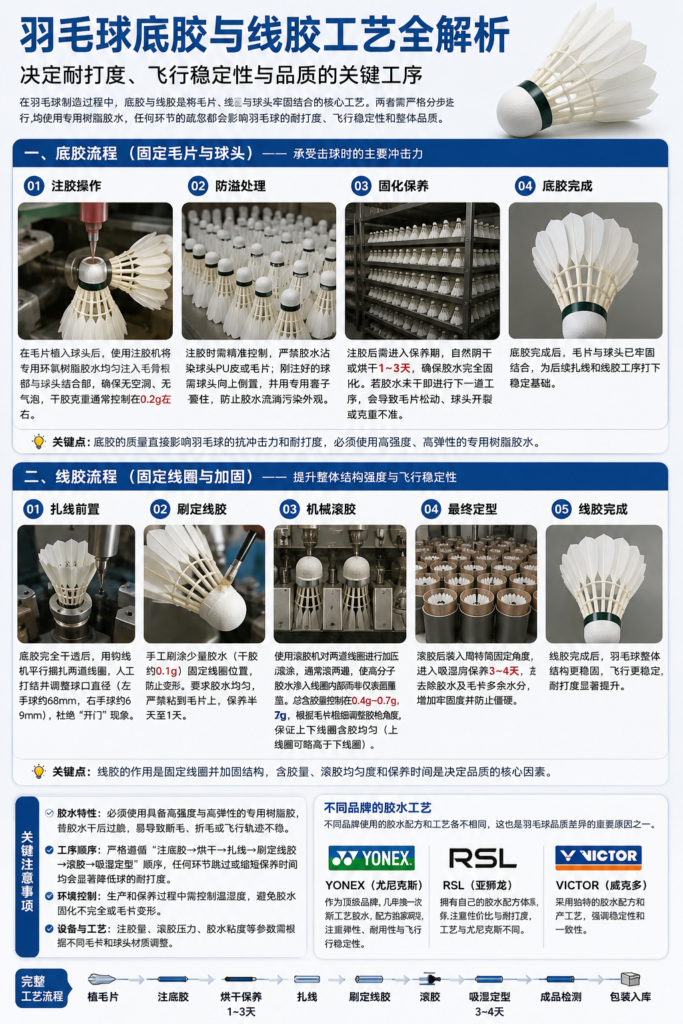
Step 5: Glue Fixing After Feather Insertion
After the feathers are inserted into the cork base, glue is applied around the feather roots.
The glue helps lock the feathers into place and improves the overall structural strength of the shuttlecock.
This process must be controlled carefully.
Too little glue may cause loose feathers. Too much glue may increase weight, affect balance, or create an uneven appearance.
In professional shuttlecock manufacturing, the glue layer should provide:
- strong bonding
- stable feather holding strength
- good impact resistance
- controlled weight
- clean appearance
For OEM shuttlecock buyers, glue quality is easy to overlook, but it directly affects durability. A shuttlecock with weak glue bonding may look fine at first, but the feathers can become loose after repeated rallies.
Step 6: Thread Binding to Lock the Feather Structure
After glue fixing, the feathers are usually reinforced by thread binding.
This process connects the feather stems and helps maintain the cone shape. It also prevents the feather bundle from spreading or shifting during play.
Professional shuttlecock production often uses nylon thread or similar strong thread material. The thread is wrapped around the feather stems in a crossing pattern to hold the structure together.
Thread binding helps improve:
- cone stability
- feather alignment
- durability
- flight consistency
- resistance to repeated impact
The thread tension must be balanced. If it is too loose, the feathers may move. If it is too tight, the feather shafts may be damaged.
A well-controlled binding process gives the shuttlecock a more stable structure and better playing performance.
Step 7: Final Shape Adjustment and Inspection
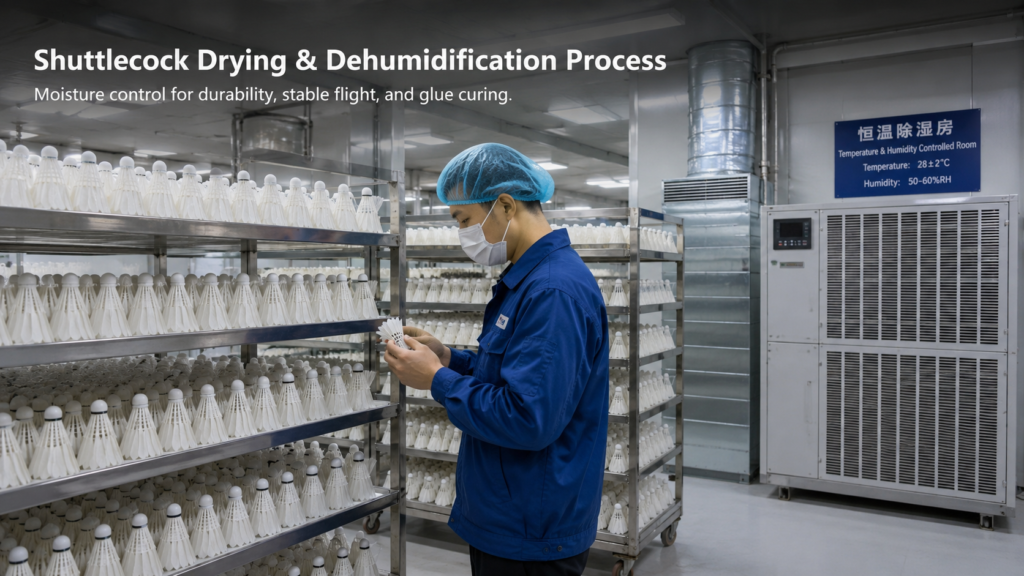
After insertion, gluing, and binding, the shuttlecock needs further inspection.
Workers check whether the feather cone is balanced and whether the feather spacing is even. Any visible deviation can affect flight quality.
Important inspection points include:
- cone angle
- feather alignment
- glue condition
- thread position
- base appearance
- overall symmetry
- feather damage
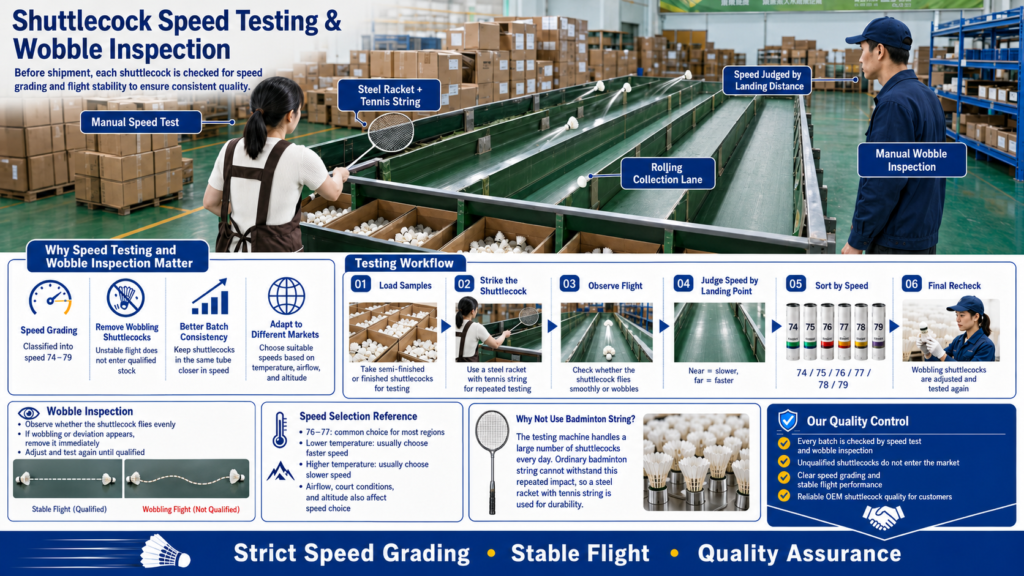
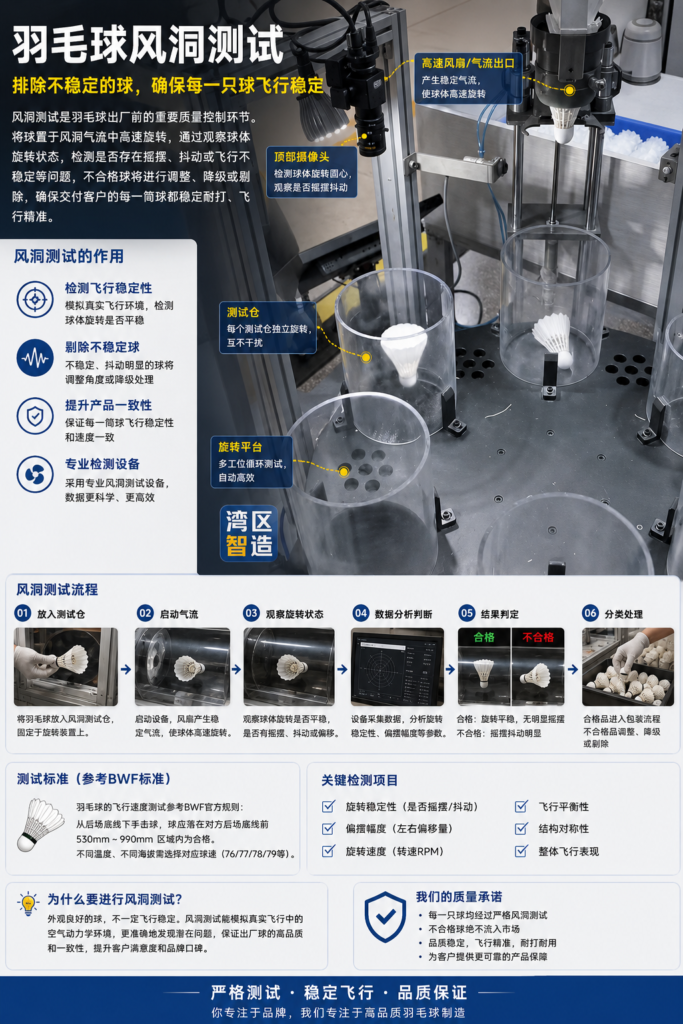
For higher-grade shuttlecocks, flight testing may also be performed to check speed, rotation, and stability.
This final inspection is especially important for OEM shuttlecock production because private label brands need consistent quality from batch to batch.
Manual Skill Still Matters
Automatic feather insertion machines improve consistency, but shuttlecock production still depends heavily on skilled workers.
Machines can insert feathers accurately, but workers still play an important role in:
- selecting feathers
- checking curvature
- feeding or positioning materials
- adjusting abnormal pieces
- inspecting finished products
- removing defective shuttlecocks
A good feather shuttlecock factory combines machine precision with experienced human inspection.
This is one reason why shuttlecock manufacturing is still difficult to fully automate. Each feather is a natural material, and natural materials always require careful selection and judgment.
Common Problems Caused by Poor Feather Insertion
Poor feather insertion can create many quality problems.
Wobbling Flight
This often happens when feather spacing, curvature, or insertion angle is inconsistent.
Loose Feathers
Loose feathers may be caused by shallow insertion, weak glue, or poor bonding.
Uneven Cone Shape
If the feathers are not inserted at the correct angle, the shuttlecock may lose its standard cone structure.
Short Durability
Weak binding or poor glue fixation can cause the feather structure to break down quickly.
Inconsistent Speed
If the feather cone is not uniform, speed may vary between shuttlecocks in the same tube.
For serious players, these problems are easy to feel. For OEM brands, they can quickly damage customer trust.
What OEM Buyers Should Look For
When sourcing shuttlecocks from an OEM shuttlecock manufacturer, buyers should not only ask about feather grade and cork type.
They should also ask how the feathers are inserted, fixed, and inspected.
Before placing bulk orders, buyers should test samples for:
- flight stability
- feather alignment
- cone shape
- speed consistency
- loose feather issues
- durability after repeated rallies
- glue and thread quality
Two factories may use similar feathers, but the final shuttlecock quality can be very different if the feather insertion process is not well controlled.
Why This Process Matters for Private Label Shuttlecock Brands
For private label shuttlecock brands, stable quality is more important than one good sample.
A customer may accept a slightly higher price if the shuttlecock performs consistently. But if every batch feels different, the brand will quickly lose trust.
A reliable feather insertion process helps private label brands achieve:
- consistent product quality
- fewer customer complaints
- stronger brand reputation
- better club feedback
- more repeat orders
This is why professional OEM badminton shuttlecock production must control both materials and assembly process.
Final Thoughts
Feather insertion is one of the most important steps in the shuttlecock manufacturing process.
It turns selected feathers and cork bases into a balanced flying structure. The process includes pre-drilled cork base preparation, feather matching, automatic insertion, glue fixing, thread binding, shape adjustment, and final inspection.
A stable shuttlecock does not come from one single component. It comes from the complete control of feather selection, insertion accuracy, glue bonding, thread binding, cone shape, and flight testing.
If you are sourcing shuttlecocks for a badminton brand, club, distributor, or wholesale business, do not judge a supplier only by price. Ask how the feathers are inserted and controlled during production.
A professional OEM shuttlecock manufacturer should be able to control every detail from feather to flight.