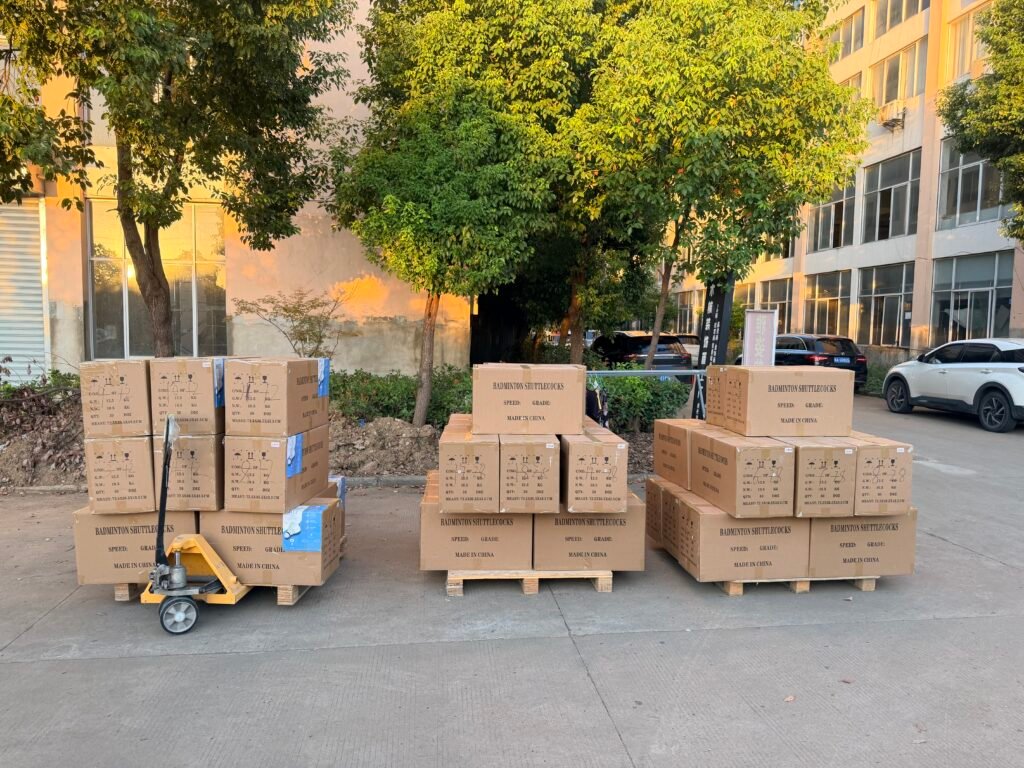
We regularly receive enquiries from buyers asking for a quotation, product photos, factory videos, packaging details, and technical specifications.
Providing a quotation is normal. Sharing product photos and production videos is also reasonable. These materials help buyers understand the general appearance of a shuttlecock, the feather shape, the cork structure, the packaging options, and the manufacturing capability of the supplier.
But there is one request that shuttlecock manufacturers hear far too often:
“Please send me more photos and videos so I can check the quality.”
This is where we need to be direct.
You cannot properly judge the quality of a feather shuttlecock from photos or videos.
A shuttlecock is not a decorative product. Its real quality is revealed only after it is hit on a badminton court.
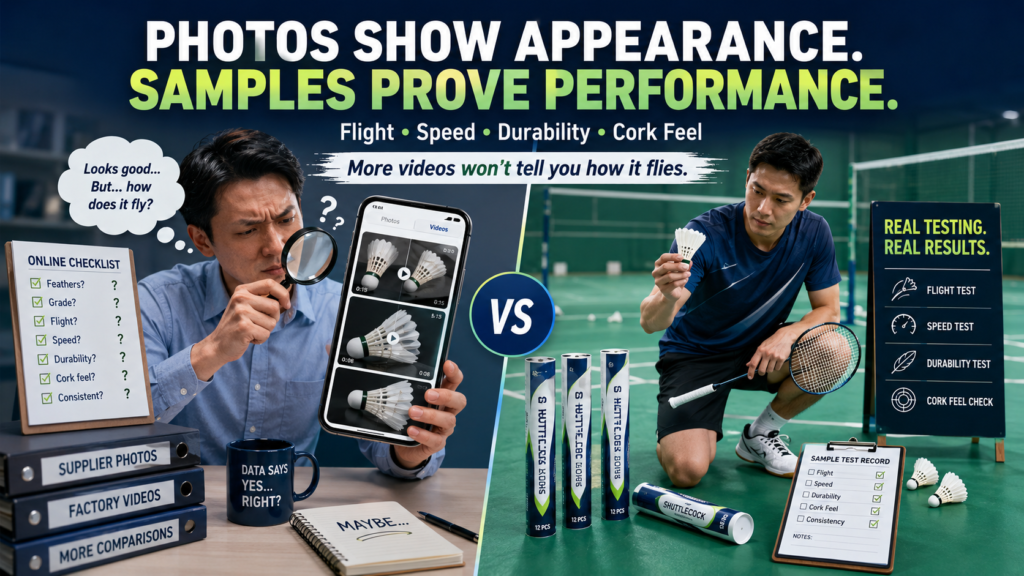
Photos can show appearance.
Videos can show appearance in motion.
Only physical sample testing can show performance.
What Photos Can Tell You About a Shuttlecock
Good product photos are useful.
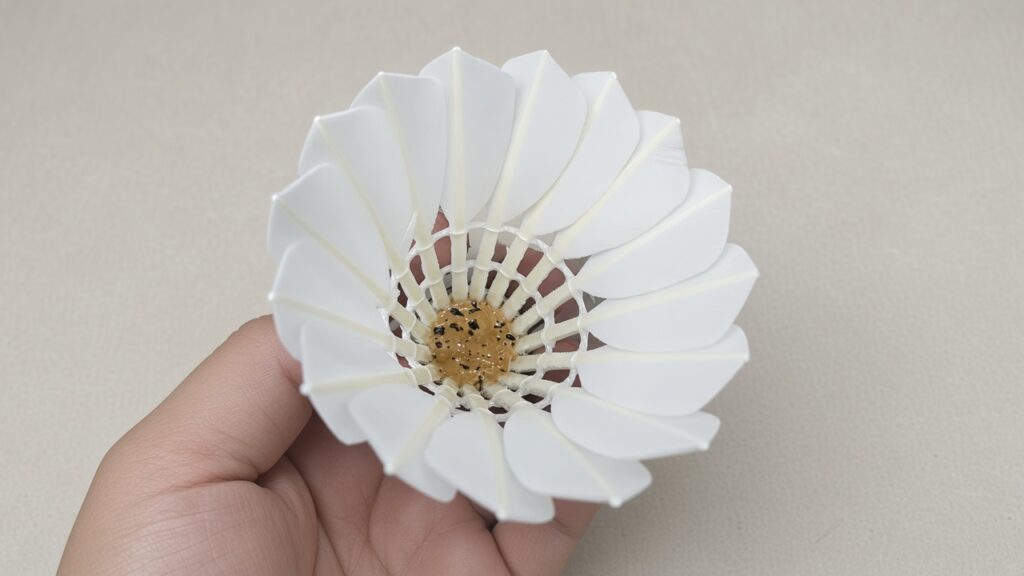
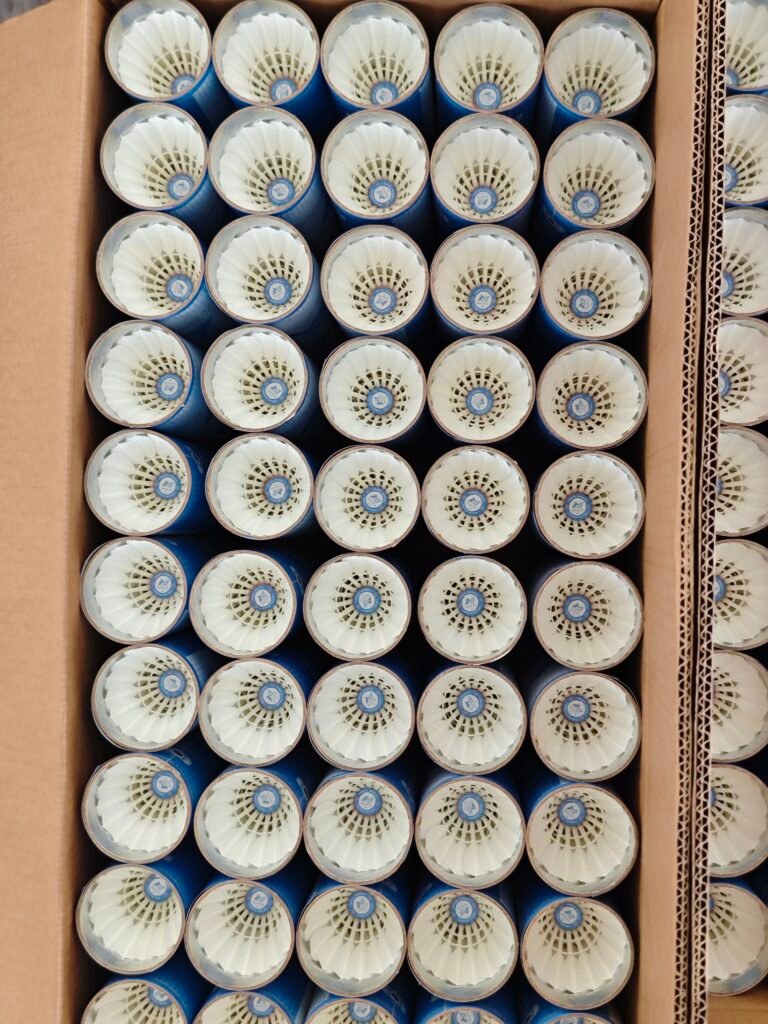
From clear close-up images, an experienced buyer may be able to observe:
- the general feather shape;
- feather colour and surface condition;
- whether the feather skirt looks symmetrical;
- the type of cork base;
- thread and glue appearance;
- tube and packaging quality;
- visible workmanship defects.
These details matter.
A badly shaped feather skirt, damaged feathers, uneven stitching, excessive glue, or a poorly wrapped cork base can often be identified from clear photographs.
However, appearance is only one part of shuttlecock quality.
A beautiful shuttlecock may still fly badly.
A less impressive-looking shuttlecock may perform extremely well on court.
The camera cannot tell you the full story.
What Videos Can Show
Videos can provide more information than still photos.
A buyer may watch:
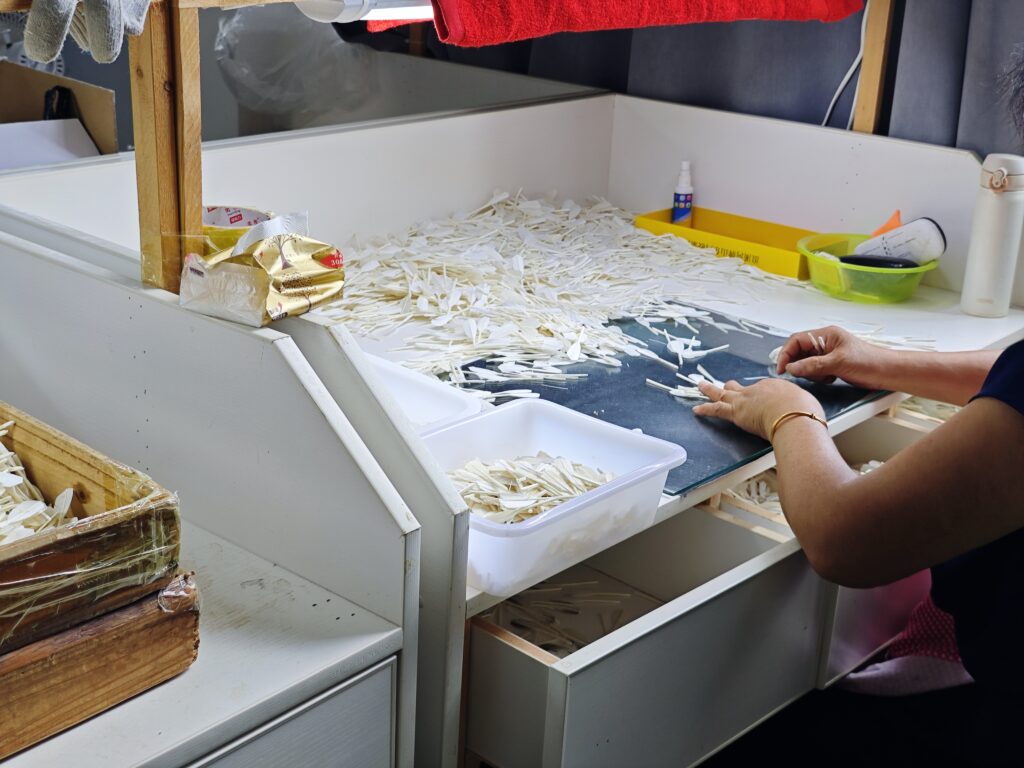
- the feather insertion process;
- glue application;
- thread binding;
- drying and conditioning;
- speed testing;
- wobble inspection;
- packaging production;
- factory capacity.
A supplier can also record a shuttlecock being hit across a court.
That may help the buyer understand the factory’s testing process and general product positioning.
But a video still cannot answer the most important purchasing questions.
It cannot tell you exactly how the shuttlecock feels when it hits your racket.
It cannot tell you how long the feathers will last during your club’s normal games.
It cannot prove that the product in the video is from the same batch that will be supplied to you.
It cannot show how the shuttlecock will behave in your local climate, altitude, hall temperature, or playing conditions.
A video is supporting information.
It is not a substitute for sample testing.
What Photos and Videos Cannot Prove
The most important performance characteristics of a feather shuttlecock cannot be confirmed from an image.
Flight Stability
A good shuttlecock should fly smoothly, rotate consistently, and avoid obvious wobbling or sideways deviation.
A photograph cannot show this.
A short supplier video may show one selected shuttlecock flying correctly, but it does not prove batch consistency.
Speed Consistency
Shuttlecocks are normally classified into speeds such as 74, 75, 76, 77, 78, and 79.
The correct speed depends on local temperature, altitude, air circulation, humidity, and playing habits.
A tube marked speed 77 may still feel too fast or too slow in a particular market.
The buyer must test it locally.
Daya tahan
Durability is one of the most important factors for clubs and distributors.
The real question is not whether the shuttlecock looks clean before play.
The real questions are:
- How many rallies can it survive?
- Do the feathers break easily?
- Does the skirt deform after several smashes?
- Does the glue remain stable?
- Does the cork soften or split?
- Can the shuttlecock still fly correctly after minor feather damage?
None of this can be confirmed from a product photo.
Hitting Feel
The cork base has a major influence on impact feel.
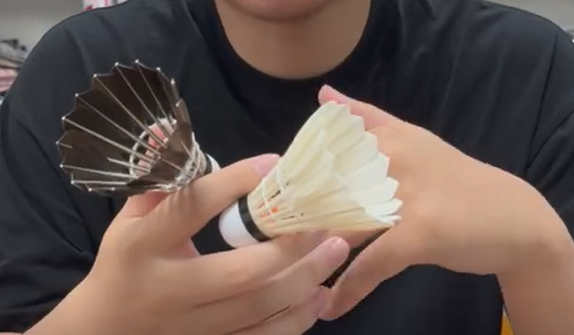
All-natural cork, three-piece cork, composite cork, and synthetic foam structures do not feel the same.
Two shuttlecocks may look almost identical but provide completely different feedback when the racket contacts the cork.
Some feel clean and responsive.
Some feel hard.
Some feel hollow.
Some lose energy on impact.
The only reliable way to judge this is to hit the shuttlecock.
Performance in Local Conditions
A shuttlecock that performs well in one country may behave differently in another.
Temperature, humidity, altitude, air-conditioning, and indoor air circulation can all affect flight distance and feather condition.
This is why an OEM shuttlecock sample should be tested in the buyer’s actual market.
A supplier can recommend a suitable speed, but the final decision should be based on local testing.
A Video Can Be Selected, Edited, or Misleading
There is another issue that serious buyers should understand.
Photos and videos can be selected.
A supplier can photograph the best-looking shuttlecocks in the factory. It can record a premium product while offering the buyer a lower-priced model. It can use samples from one production batch and deliver goods from another.
Even an honest supplier normally chooses clean products and good camera angles for marketing material.
This is not unique to the shuttlecock industry. It is how product marketing works.
Therefore, buyers should never treat visual content as final quality proof.
If the product shown in the video and the product delivered are different, how will the buyer know before receiving the goods?
The answer is simple:
The buyer needs physical samples, clear specifications, and an approved reference sample.
Why Some Buyers Avoid Paying for Samples
Many buyers ask for repeated quotations, photos, videos, specifications, and packaging options but refuse to pay for samples or courier costs.
Not every buyer who requests information is wasting time. New buyers naturally need basic details before deciding whether a supplier is worth testing.
However, when a buyer wants extensive information but refuses to invest even a small amount in sample testing, it often indicates one of three situations.
The Buyer Is Only Collecting Prices
Some enquiries are sent to many factories simply to build a price comparison sheet.
The buyer may not have a confirmed project, customer, or purchasing plan.
Its main purpose is to discover the lowest market quotation.
The Buyer Has No Real Product Knowledge
An inexperienced buyer may believe that feather grade, product appearance, and supplier claims are enough to judge quality.
It may not understand the importance of flight, speed, cork feel, durability, and local conditions.
The Buyer Wants the Supplier to Carry All the Risk
The buyer wants free samples, free courier service, repeated testing, packaging development, and detailed quotations before making any commitment.
This transfers all early-stage development cost to the supplier.
That is not a balanced business relationship.
Sample Fees Are Not the Real Cost
The price of one or two dozen shuttlecock samples is small compared with the cost of a commercial order.
For a serious distributor or private-label brand, sample testing protects the buyer from much larger risks:
- ordering the wrong speed;
- choosing the wrong feather grade;
- receiving poor durability;
- selecting an unsuitable cork structure;
- damaging the buyer’s own brand;
- holding unsellable inventory;
- receiving customer complaints.
Paying for samples and courier delivery is not an unnecessary expense.
It is basic purchasing due diligence.
A buyer who may eventually order hundreds or thousands of dozens should not make that decision based only on WhatsApp photos and short factory videos.
What Professional Shuttlecock Buyers Do
Professional buyers usually follow a clear evaluation process.
Define the Target Product
The buyer should tell the supplier:
- the current reference model;
- target price level;
- player level;
- required speed;
- preferred feather type;
- cork preference;
- expected durability;
- local climate and altitude.
Saying only “send your best quality at the lowest price” does not provide enough information.
Purchase Physical Samples
The buyer should test at least two or more dozens when possible.
One shuttlecock cannot represent the consistency of an entire production batch.
Multiple tubes allow the buyer to compare:
- speed consistency;
- flight stability;
- durability;
- cork feel;
- feather breakage;
- differences between individual shuttlecocks.
Use Several Players
A single player’s opinion can be subjective.
Samples should ideally be tested by players with different styles and experience levels.
A hard-hitting player may focus on durability. A technical player may notice flight and control. Club managers may care more about total playing cost.
Compare Against a Known Reference
The sample should be tested against a familiar model already used in the target market.
The buyer can then evaluate whether the new product is:
- faster or slower;
- more or less durable;
- harder or softer on impact;
- more stable in flight;
- suitable for the intended selling price.
Record Useful Feedback
Professional feedback is more useful than simply saying “good” or “bad.”
A useful sample report may include:
- number of games or rallies tested;
- common failure point;
- speed result;
- flight deviation;
- cork feel;
- player comments;
- comparison with the reference model.
This allows the manufacturer to make practical adjustments.
A Quotation Is Not a Quality Certificate
A low price does not prove that a shuttlecock offers good value.
A high price does not automatically prove premium quality.
A quotation only tells the buyer what the supplier is asking for the product.
It does not prove:
- flight stability;
- durability;
- batch consistency;
- cork quality;
- local suitability;
- customer acceptance.
This is why comparing ten quotations without testing ten samples often creates more confusion rather than a better decision.
Two factories may use similar words such as:
- Grade A goose feather;
- tournament quality;
- natural cork;
- stable flight;
- long durability.
Their actual products may perform very differently.
The language on the quotation cannot replace the shuttlecock on the court.
Our Position as a Shuttlecock Manufacturer and Trader
We are willing to provide buyers with the information needed to evaluate a potential supplier.
We can provide:
- quotations;
- product specifications;
- feather and cork options;
- packaging details;
- factory and production videos;
- speed recommendations;
- OEM and private-label information.
But we will not pretend that these materials prove the full quality of a shuttlecock.
They do not.
The buyer must test physical samples.
We also believe that serious sample development should involve commitment from both sides. The supplier invests time in selecting models, preparing samples, answering technical questions, and arranging delivery.
The buyer should be willing to pay a reasonable sample and courier cost.
This is not about making profit from samples.
It is about confirming that both sides are genuinely interested in developing a product rather than collecting prices and media files.
Do Not Compare Professional Testing with Guesswork
Shuttlecock manufacturing is a specialised process.
Factories spend years learning how feather origin, curvature, thickness, cork density, glue, thread tension, drying conditions, speed classification, and local climate affect performance.
A buyer does not need to become a manufacturing expert.
But it should respect the limits of visual inspection.
Looking at several photos does not create the same knowledge as testing the product.
Watching one flight video does not prove durability.
Requesting more videos does not replace making a purchasing decision.
There is nothing wrong with asking questions.
The problem begins when guesswork is treated as professional product evaluation.
Photos Introduce the Product; Samples Prove It
Product photos and videos are useful at the beginning of supplier evaluation.
They can help a buyer decide whether the product is worth testing.
But they should lead to the next step, not replace it.
The correct purchasing process is:
- Review the supplier and basic product information.
- Confirm the approximate specification and price range.
- Purchase representative samples.
- Test the samples locally.
- Provide detailed feedback.
- Approve the final specification.
- Confirm packaging and bulk production.
Skipping the sample stage may save a small amount at the beginning, but it can create a much larger loss later.
Final Thoughts
A feather shuttlecock is a performance product.
Its real quality is found in flight stability, speed consistency, durability, cork response, and playing feel.
These characteristics cannot be judged reliably from photos and videos.
Visual content can show appearance and manufacturing capability. It cannot replace local court testing.
Serious buyers test samples before placing commercial orders.
Serious suppliers provide representative samples and explain their specifications honestly.
When both sides follow a professional testing process, there is less misunderstanding, less price-only negotiation, and a much better chance of building a stable long-term relationship.
Photos can attract attention. Videos can introduce the factory. Only sample testing can prove the shuttlecock.