The 2026 Badminton Shuttlecock Market Is No Longer a One-Way Bet
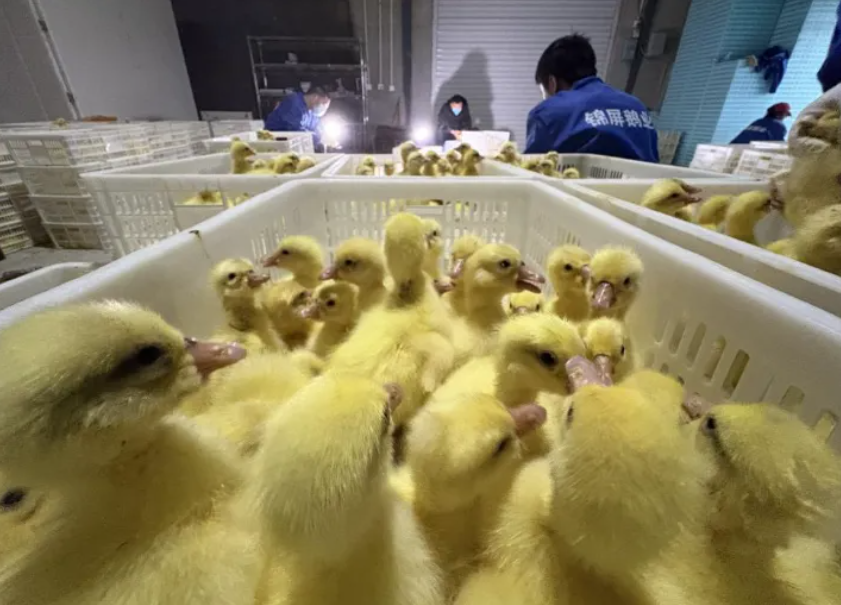
From 2022 to 2025, many badminton shuttlecock factories, feather processors, and raw feather traders enjoyed an extraordinary upcycle.
Natural feather shuttlecocks became more expensive, raw feather supply tightened, and buyers often accepted higher prices because there were few better options.
That cycle has now changed.
Since the 2026 Spring Festival, Chinese market reports have described a broad correction in badminton shuttlecock prices, with mainstream brands and product categories moving lower by roughly 10% to 20%.
RSL and other major brands announced reductions, while YONEX terminal retail prices also softened as older high-cost inventory was gradually digested.
The driver is simple but painful:
- Raw feather costs are falling.
- Supply pressure has eased.
- Demand is no longer strong enough to absorb every price increase.
For players, cheaper shuttlecocks are good news.
For factories and traders, the same price drop can become a direct hit to profit and cash flow.
The most difficult part is timing.
A factory may buy goose or duck feathers this week, only to see the market price fall again before those feathers are sorted, shaped, assembled, tested, packed, and sold.
Finished shuttlecocks are also being repriced more frequently, sometimes month by month. When brands reduce prices, distributors and clubs immediately expect smaller suppliers to follow.
That creates pressure across the entire supply chain.
This is not only a price problem. It is a survival problem.
Why the Downturn Hurts Shuttlecock Factories So Quickly
The badminton shuttlecock business has a special cost structure.
A large share of production cost comes from the wing feathers of ducks and geese. When raw feather prices rise, factories with low-cost stock can earn strong margins.
When raw feather prices fall, the opposite happens: high-cost inventory becomes a burden.
The pressure appears in five main areas.
1. Inventory Loses Value Before It Is Sold
Raw feathers, semi-finished feather pieces, and packed shuttlecocks all carry yesterday’s cost into today’s falling market.
A factory may still be holding material purchased near the previous market peak while customers are already asking for prices based on the latest lower quotation.
The longer that inventory remains unsold, the greater the pressure on cash flow and profit.
2. Buyers Delay Orders
When clubs, wholesalers, importers, and distributors believe prices may fall again, they reduce order quantities and wait.
Instead of purchasing three or six months of stock, many buyers purchase only enough to cover immediate demand.
This reduces factory order visibility and makes production planning more difficult.
3. Brand Pricing Becomes a Market Ceiling
Once large brands cut retail or wholesale prices, smaller factories cannot simply maintain their previous quotations without risking the loss of orders.
Even a relatively small brand adjustment changes buyer expectations across the market.
Customers begin asking every OEM shuttlecock supplier the same question:
Major brands have reduced their prices. Why has your quotation not fallen yet?
4. Labour Becomes Harder to Balance
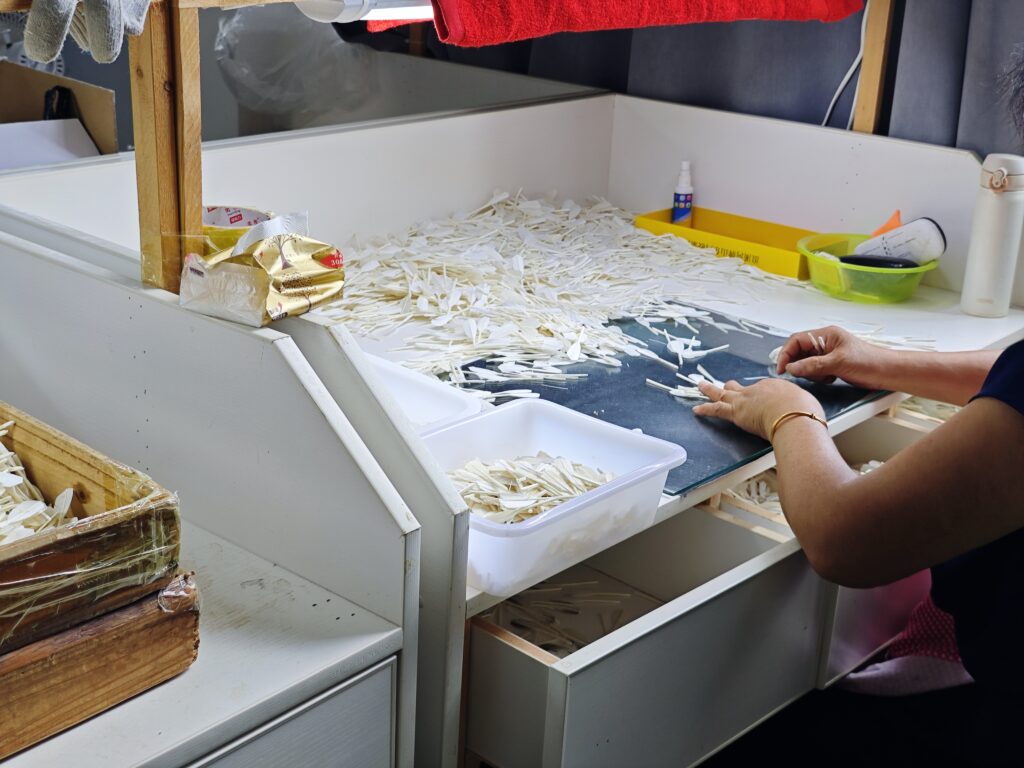
Shuttlecock production still depends on skilled work, including:
- Feather grading
- Feather matching
- Feather insertion
- Glue control
- Drying and conditioning
- Speed testing
- Wobble inspection
- Final quality control
If a factory reduces staff too aggressively, it may lose trained workers who are difficult to replace.
If it keeps full production running without enough orders, finished-goods inventory may grow at the wrong cost.
5. Traders Face Pressure From Both Sides
Customers want lower prices immediately.
Factories, however, may still be holding expensive raw feathers, semi-finished products, or completed inventory.
The trader is caught between buyers expecting tomorrow’s price and suppliers carrying yesterday’s cost.
This is why some feather-piece factories are closing, some shuttlecock factories are taking temporary holidays, and some producers are reducing excess labour.
The market is falling faster than many companies can adjust.
What Shuttlecock Manufacturers Should Do Now
Stop Treating Inventory as Security
In a falling market, excessive inventory is not strength. It is risk.
Factories should shorten raw feather purchasing cycles and buy materials closer to confirmed production requirements.
A more disciplined purchasing system should include:
- Smaller raw material batches
- Shorter inventory coverage
- Weekly stock valuation
- Purchasing linked to confirmed orders
- Separate records for old-cost and new-cost inventory
- Clear limits on speculative purchasing
The objective is not to identify the absolute bottom of the feather market.
No factory can consistently predict the exact bottom.
The objective is to prevent one purchasing decision from threatening the company’s cash flow.
Calculate Profit by Batch
Factories should separate high-cost stock from newly purchased lower-cost material.
Using one average cost across all inventory can hide serious losses.
Batch-level cost tracking helps management understand:
- Which models can be repriced
- Which stock needs controlled clearance
- Which orders are genuinely profitable
- Where losses may need to be accepted
- Which models should stop production temporarily
Without clear numbers, a factory may quote too high and lose the order, or quote too low and sell high-cost inventory at an unnecessary loss.
Protect Cash Flow Before Protecting Face
It is better to operate a smaller but healthy factory than to produce at full capacity and sell at negative margins.
Manufacturers should:
- Reduce speculative production
- Prioritise paid and confirmed orders
- Avoid excessive customer credit
- Shorten payment periods
- Control packaging investment
- Review the real gross margin of every order
A full workshop does not necessarily mean a healthy business.
A factory can remain busy while losing money on every shipment.
Keep the Core Production Team
Factories may need temporary holidays, rotating shifts, or reduced working hours.
However, they should protect the workers who control the quality of the product.
These include employees who understand:
- Feather curvature and stiffness
- Left-wing and right-wing feather matching
- Cork-base selection
- Glue application
- Humidity and drying control
- Shuttlecock speed classification
- Flight wobble correction
Ordinary capacity can be rebuilt.
Experienced technical knowledge is much harder to replace.
Sell Quality, Not Panic
If every factory competes only on price, the entire market becomes weaker.
Manufacturers should demonstrate measurable product value, such as:
- Speed consistency
- Stable flight
- Durability testing
- Feather symmetry
- Cork-base quality
- Glue strength
- Climate suitability
- Low defect rates
Buyers are more likely to trust a supplier that can explain why its shuttlecock performs better than one that simply offers another low quotation.
Use Shorter Quotation Periods
In a volatile feather market, a quotation valid for 30, 60, or 90 days can become dangerous.
A validity period of 7 to 14 days is often more realistic.
For larger OEM or private-label orders, quotations can include:
- Raw material confirmation before production
- Separate packaging and tooling costs
- Regular pricing reviews for repeat orders
- Adjustment clauses for major feather-price movements
This protects both the buyer and the supplier.
What Traders and Exporters Should Do Now
For traders, the answer is not simply to demand lower prices from factories.
The answer is to become more useful to customers.
Importers, distributors, brands, and club buyers do not only need the cheapest shuttlecock.
They also need:
- Stable supply
- Reliable feather grading
- Consistent speed
- Clear delivery schedules
- Honest price communication
- Packaging support
- Quality-claim handling
- Export and logistics coordination
A trader who can explain the market clearly will keep customers longer than one who changes prices without context.
Build Clear Product Levels
Traders should divide their shuttlecock range into clear categories:
- Entry-level training shuttlecocks
- Club training shuttlecocks
- Match-grade shuttlecocks
- Premium tournament shuttlecocks
Each category should have:
- A clearly defined buyer
- A target price range
- A specific feather and cork structure
- A measurable performance promise
This prevents customers from comparing every shuttlecock only by price per tube.
Avoid Unconfirmed Inventory
A temporary factory discount does not automatically make a product a good purchase.
In a falling market, discounted goods may lose value again before reaching the customer.
Stock should be supported by:
- Confirmed customer demand
- Predictable club consumption
- Repeat-order history
- A clear sales channel
- Sufficient margin to absorb another price adjustment
Inventory without a customer is speculation.
Do Not Promise Endless Price Reductions
If customers believe prices will always fall, they will never order confidently.
A better message is:
Prices are being adjusted by production batch as high-cost inventory is cleared. Stable long-term supply depends on balanced ordering rather than waiting indefinitely for the lowest possible market price.
This is more credible than either denying the downturn or promising another reduction next month.
Help Both Sides Manage Risk
The strongest traders during this downturn will help factories move stock without destroying product value.
At the same time, they will help buyers obtain reasonable prices without waiting forever.
That may involve:
- Smaller trial quantities
- Mixed-model shipments
- Neutral packaging for initial testing
- Partial delivery schedules
- Alternative product grades
- Regular price reviews
How to Hold the Line Without Ignoring Reality
The badminton shuttlecock industry had a strong run between 2022 and 2025.
Many factory owners and feather traders earned substantial profits during that period.
The current downturn is the market taking back part of that excess profit.
Complaining will not change it.
But there is still a disciplined way to respond.
Do Not Chase the Bottom Blindly
Do not buy raw feathers simply because they look cheaper than last month.
A falling price can continue falling.
Do Not Produce Only to Keep the Workshop Busy
Production without confirmed demand creates inventory, not profit.
Do Not Sacrifice Quality to Match Every Competitor
Quietly reducing feather grade, cork quality, glue use, drying time, or testing standards may protect one order but destroy repeat business.
Do Not Hold High-Cost Inventory Forever
Some old inventory may need to be:
- Cleared
- Downgraded
- Repackaged
- Sold into another market
- Combined with newer material under controlled specifications
Refusing to recognise a loss does not remove the loss.
Do Not Cut Every Skilled Worker
When demand returns, rebuilding the same production team may cost more than retaining a smaller core team through the downturn.
Operate With Discipline
The practical response is straightforward:
- Buy smaller batches.
- Quote faster.
- Collect payments earlier.
- Keep skilled workers.
- Test every production batch.
- Explain pricing honestly.
- Build products for specific buyers.
- Remove weak or overlapping models.
- Protect cash flow.
- Develop new customers while competitors retreat.
The companies that survive 2026 will not necessarily be the largest factories.
They will be the factories and traders with:
- The clearest cost data
- The fastest market response
- The strongest quality control
- The most trusted customer relationships
Final Takeaway
Falling raw feather prices are not only a threat.
They are also a market reset.
The badminton shuttlecock industry is moving from shortage-driven profit back to discipline-driven competition.
Manufacturers and traders who depended only on rising prices will feel the greatest pressure.
Those who control inventory, protect cash flow, keep quality stable, and communicate honestly can still build stronger businesses.
In a rising market, many companies can make money. In a falling market, only disciplined companies keep it.