
Berita
What Are “Black-Washed-White” Shuttlecock Feathers? A 10,000-Dozen OEM Order for Korea
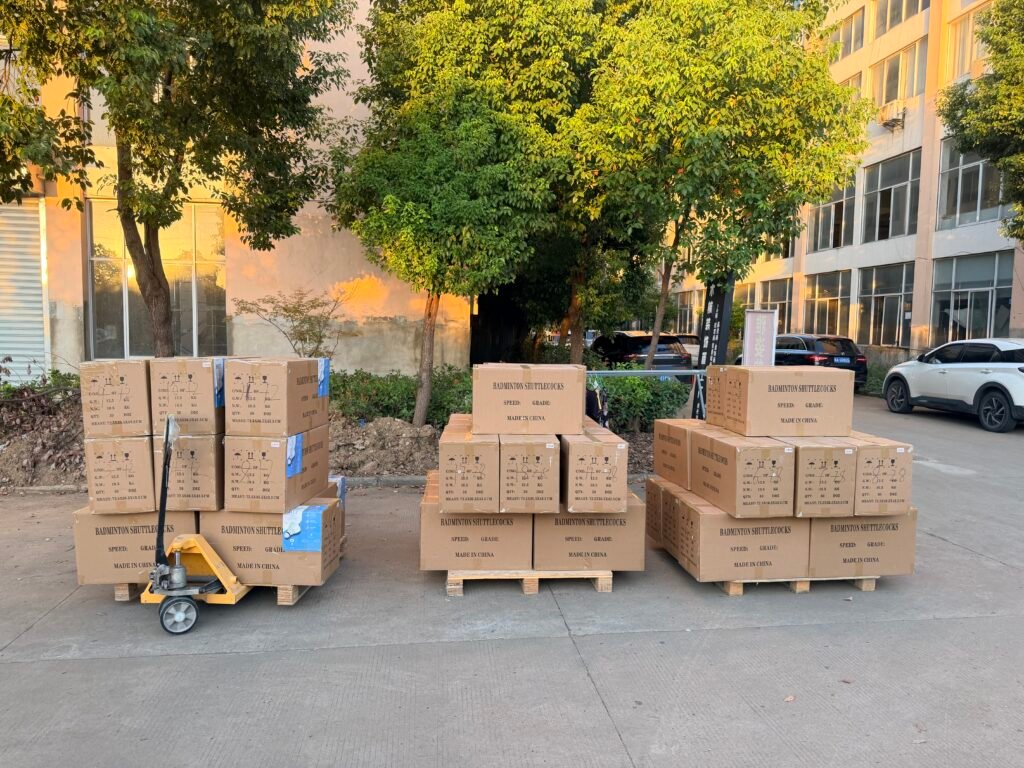
After the recent holiday break, our shuttlecock factory received an order for **10,000 dozen shuttlecocks** from a Korean customer.
That equals 120,000 shuttlecocks.
One detail makes this order particularly interesting:
The customer selected a type of feather commonly called **black-washed-white feather** in the Chinese shuttlecock industry.
For buyers outside China, terms such as *black-washed-white*, *rewash*, *reverse wash* or even *three-wash* can be confusing.
They are often used loosely in the market.
So what do these terms actually mean, and why would an overseas buyer choose this type of shuttlecock?
## What Is a Black-Washed-White Feather?
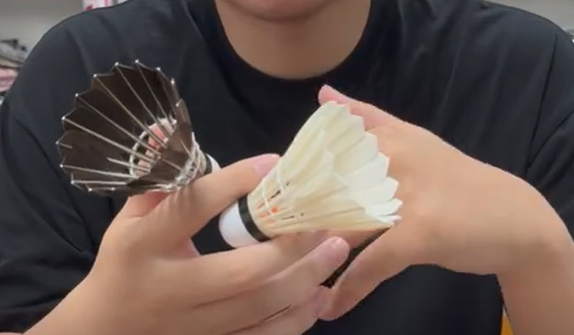
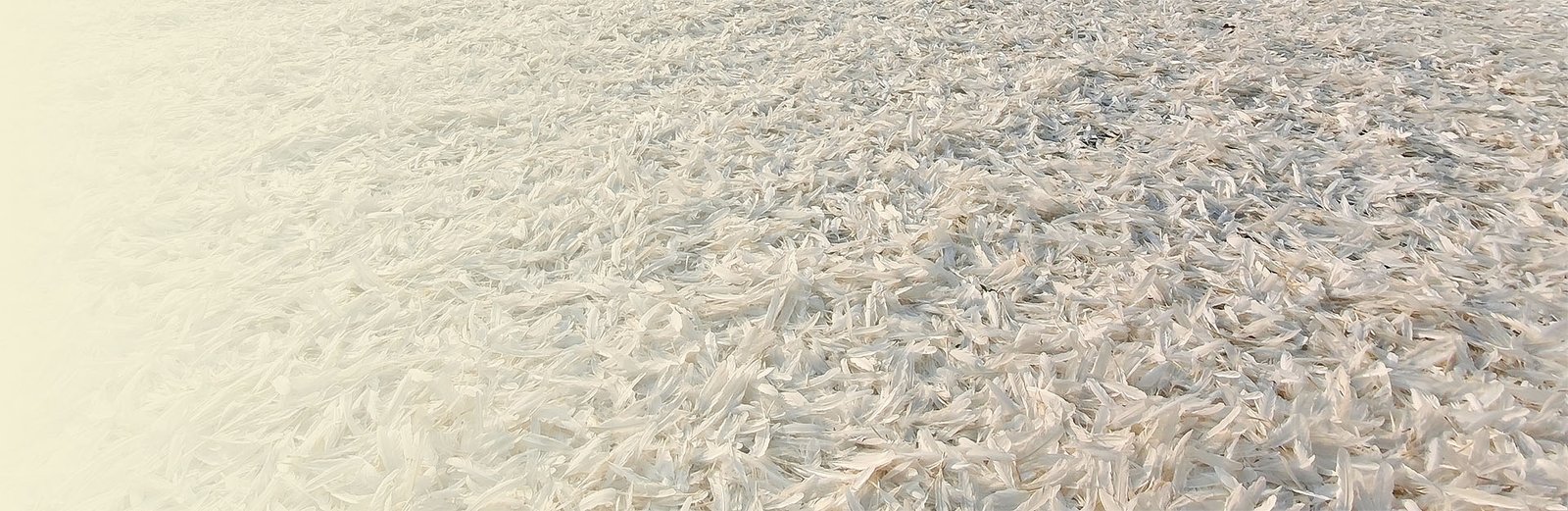
Natural goose feathers are not all pure white.
Some wing feathers are naturally grey, dark grey or black.
In what the Chinese industry commonly calls a **black-washed-white process**, darker feathers are treated to remove much of their original colour, producing a lighter cream or off-white appearance.
A Chinese industry explainer describes the process simply as bleaching black or grey feathers into a lighter beige colour. It also points out that these feathers may look slightly more yellow than naturally white feathers.
This is not simply ordinary feather washing.
It involves stronger colour-removal treatment.
A published Chinese patent on black-to-white feather processing, for example, describes several stages including acid and alkaline treatment, reduction bleaching, oxidation bleaching, stabilization and drying. The patent also highlights one of the main technical challenges: removing colour while limiting damage to feather strength.
That is why processing quality matters.
## Black-Washed-White Is Not Automatically Low Quality
A common misunderstanding is that a feather that has been bleached must automatically produce a poor shuttlecock.
That is too simple.
The final result still depends on the original feather.
Factories need to consider:
– feather shaft strength;
– feather thickness;
– curvature;
– vane condition;
– feather shape;
– left- and right-wing consistency;
– bleaching quality;
– final moisture condition.
A good original dark goose feather that has been processed correctly can still have useful mechanical properties.
At the same time, aggressive or poorly controlled bleaching can remove too much natural oil and weaken the feather.
This may increase the risk of fraying or brittleness.
So for OEM buyers, the important question should not simply be:
**“Is this black-washed-white?”**
It should be:
**“What is the original feather quality, and how does the finished shuttlecock actually perform?”**
## What About “Rewashed” or “Reverse-Washed” Feathers?
This is where terminology becomes confusing.
In the video you sent, the creator specifically points out that black-washed-white feathers are often incorrectly called *reverse-washed* in shuttlecock marketing.
The same explainer uses *rewash* or *reverse wash* for another situation: lower-grade or less attractive feathers being processed again and sometimes mixed with normal feathers.
In that case, appearance and durability may be different from higher-grade original feathers.
This distinction is useful because buyers often see one simple product description:
**Goose feather shuttlecock.**
But two goose feather shuttlecocks can use very different feather materials and processing methods.
## And What Does “Three-Wash” Mean?
Terms such as **three-wash** are sometimes heard in feather and shuttlecock trading, but buyers should be careful.
It is not a standardized international shuttlecock grade.
Different suppliers may use repeated-washing terminology differently.
In practice, the term may refer to feathers that have gone through additional cleaning, colour treatment or repeated processing.
That does not tell you enough about quality by itself.
For an OEM buyer, asking whether a feather is “three-wash” is less useful than asking:
– Is it goose or duck?
– What feather shape is used?
– Is it naturally white or colour-treated?
– Has it been reprocessed?
– What is the shaft strength?
– How is durability after actual hitting?
– How stable is the finished shuttlecock?
**Trade terminology should never replace physical sample testing.**
## Why Does Black-Washed-White Feather Have a Market?
The main reason is product positioning.
Naturally white, high-grade goose wing feathers can be expensive.
Black-washed-white feathers can offer another material option for buyers trying to balance:
**flight + durability + appearance + price**
This does not mean they are always better or always cheaper.
The result depends heavily on feather selection and processing quality.
But there is clearly a commercial market for this category.
Our recent Korean order is a good example.
After the holiday, the factory received an order for **10,000 dozen black-washed-white feather shuttlecocks**.
We do not use this order to claim that black-washed-white feathers are suitable for every market.
But it does show that overseas buyers are actively purchasing products in this segment when the specification and price positioning make sense.
## Why Sample Testing Matters More Than the Name
This is especially important with processed feathers.
Two factories may both describe a shuttlecock as:
**black-washed-white goose feather**
but the finished products may perform very differently.
The buyer should test:
– flight stability;
– wobble;
– shuttlecock speed;
– hitting feel;
– feather durability;
– consistency between pieces.
The label describes the material category.
The racket tells you the actual quality.
That is why we normally recommend physical samples before confirming a large OEM order.
For an order of 10,000 dozen, even a small difference in durability or consistency becomes commercially significant.
## What OEM Buyers Should Ask Their Supplier
If you are sourcing this type of shuttlecock, do not rely only on words such as “goose feather,” “black-washed-white” or “rewash.”
Ask the supplier to explain the actual product.
For example:
**What feather shape is used?**
Full-round, large square, medium square and other cuts can perform differently.
**What is the original feather condition?**
Colour treatment does not tell you everything about the original feather grade.
**How is durability controlled?**
Processing quality can affect brittleness and feather surface condition.
**How is flight tested?**
Finished shuttlecocks should still be checked for speed and wobble.
**Can I test samples before bulk production?**
For us, the answer should always be yes.
## Final Thoughts
Black-washed-white feathers are not mysterious.
They are simply another part of the natural feather supply chain.
But the terminology around them can easily become confusing.
Black-washed-white, rewashed, reverse-washed and three-wash are not terms that buyers should treat as universal quality grades.
The real questions are much more practical:
**What feather was used?
How was it processed?
How does the finished shuttlecock fly?
How durable is it?
And does the price make sense for the target market?**
Our recent **10,000-dozen Korean OEM order** shows that black-washed-white shuttlecocks have real demand.
But for us, the order quantity is not the most important point.
The important point is that buyers increasingly understand that there are many different ways to build a feather shuttlecock.
And the best purchasing decisions come from understanding the material — not simply reading the product name.