In the feather shuttlecock manufacturing process, many buyers pay attention to feathers, cork bases, glue, and flight testing. However, one important step is often ignored: drying and dehumidification.
After feather insertion, base glue, thread binding, and thread glue application, the shuttlecock is still not ready for final testing or packaging. The semi-finished shuttlecocks need to enter a controlled drying and dehumidification stage.
This process helps remove excess moisture, stabilize the glue structure, prevent stiffness, and improve shuttlecock durability and flight consistency.
For an OEM shuttlecock manufacturer, drying and dehumidification are not optional steps. They are critical quality control processes that affect the final performance of a feather shuttlecock.
Why Moisture Control Is Important in Shuttlecock Manufacturing
A feather shuttlecock is made from several different materials:
- natural goose or duck feathers
- cork or composite cork base
- white leather or PU outer wrap
- nylon thread
- resin-based glue
- moisture-sensitive feather stems
Each material reacts differently to moisture, temperature, and drying time.
If a shuttlecock contains too much moisture, the glue may not cure properly, the feathers may become soft, and the structure may become unstable.
If the shuttlecock becomes too dry too quickly, the glue may become hard and brittle, and the feather stems may lose flexibility.
This is why a professional feather shuttlecock factory must control moisture carefully after the glue and thread processes.
Good moisture control helps improve:
- feather fixation
- glue curing
- thread stability
- cone shape retention
- durability
- flight stability
- product consistency
A shuttlecock may look finished after gluing and binding, but its internal structure still needs time to stabilize.
Where Drying Happens in the Manufacturing Process
Drying and dehumidification usually happen after the key structural processes are completed.
The typical process is:
- feather insertion
- base glue injection
- base glue curing
- thread binding
- fixing glue application
- rolling glue reinforcement
- drying and dehumidification
- shape adjustment
- speed testing
- final inspection and packaging
This order matters.
If drying is rushed or skipped, the shuttlecock may show problems during actual play, even if it looks normal during visual inspection.
What Is the Shuttlecock Drying Room?
A shuttlecock drying room, also called a dehumidification room or conditioning room, is a controlled space where semi-finished shuttlecocks are stored for several days after glue application.
The purpose is not simply to “dry” the shuttlecock. The real purpose is to balance moisture, glue curing, and material stability.
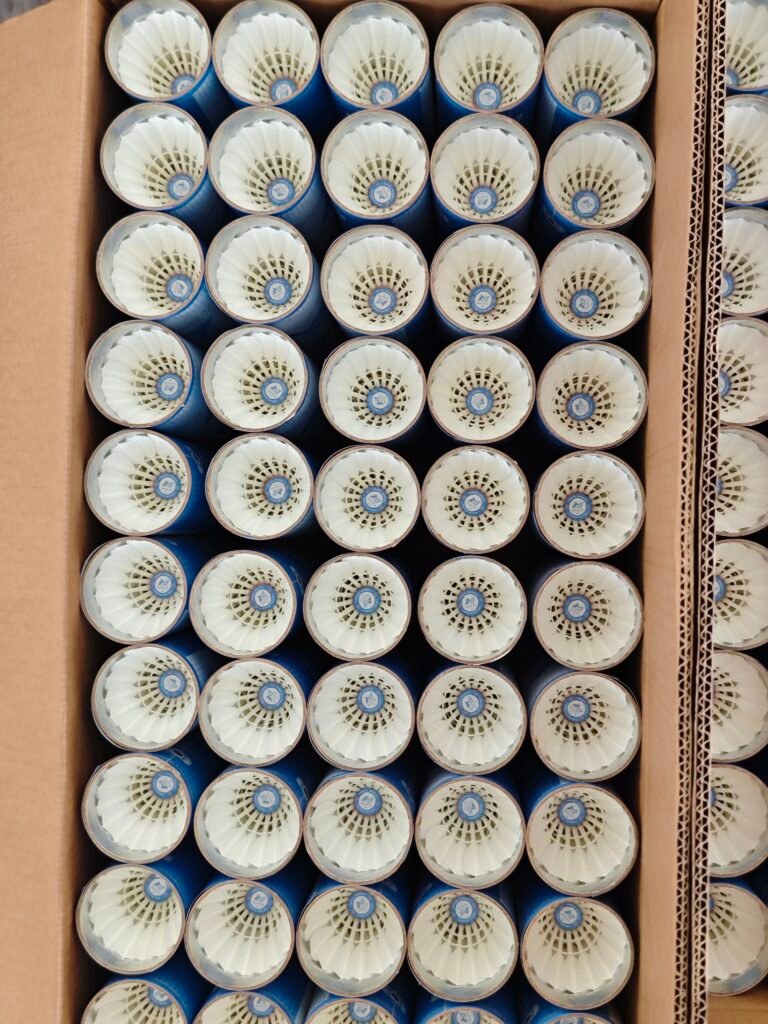
Inside the drying room, shuttlecocks are usually placed on racks, trays, or in holding tubes to maintain their cone angle and prevent deformation.
The room conditions may be controlled by:
- temperature control
- humidity control
- airflow circulation
- dehumidification equipment
- storage time management
This process allows the glue, thread, feathers, and cork base to reach a more stable condition before final testing.
How Drying Affects Glue Curing
The glue system used in feather shuttlecock production is not ordinary adhesive. Shuttlecock glue must provide both strength and flexibility.
Base glue fixes the feather roots into the cork head. Thread glue reinforces the thread rings and locks the feather cone structure.
After these glue processes, the adhesive needs time to cure and stabilize.
If the shuttlecock is moved too quickly to the next process, the glue may not reach its full bonding strength. This can cause:
- loose feathers
- weak thread bonding
- unstable cone shape
- poor durability
- inconsistent flight
- head cracking under impact
Proper drying gives the glue enough time to develop stable bonding strength while maintaining the flexibility needed for repeated hitting.
Why Over-Drying Can Also Be a Problem
Drying does not mean removing all moisture aggressively.
Feathers are natural materials. If they become too dry, they may turn brittle. Brittle feathers are easier to break during smashes, drives, and fast rallies.
Glue can also become too hard if curing conditions are not controlled well. When glue becomes overly stiff, the shuttlecock may lose its natural flexibility.
This can lead to:
- stiff hitting feel
- faster feather breakage
- reduced durability
- unstable performance
- poor player feedback
A good drying process must balance moisture removal and material flexibility.
This is why experienced shuttlecock manufacturers do not rely only on speed. They rely on controlled conditioning.
Dehumidification vs Simple Heating
Some people think drying means using heat only. In shuttlecock manufacturing, that is not always the best approach.
Simple heating can remove moisture quickly, but it may also create uneven drying. The outer parts of the shuttlecock may dry faster than the internal glue area, which can lead to unstable curing.
Dehumidification focuses more on removing moisture from the surrounding air. This creates a more stable environment for gradual drying and conditioning.
For feather shuttlecocks, this is often better than aggressive high-temperature drying because the product contains natural feathers, glue, thread, and cork materials that all require balanced treatment.
A controlled dehumidification process helps:
- reduce excess moisture
- avoid sudden hardening
- protect feather flexibility
- stabilize glue curing
- maintain cone shape
- improve batch consistency
For OEM shuttlecock buyers, this process is important because it helps ensure that bulk production performs consistently, not just the first sample.
How Long Should Shuttlecocks Stay in the Drying Room?
The drying and conditioning time depends on the factory process, product grade, glue system, weather, and moisture level.
In many production settings, semi-finished feather shuttlecocks may stay in the drying or dehumidification room for several days.
This gives enough time for:
- glue curing
- moisture balancing
- thread stabilization
- cone shape fixing
- material conditioning
Higher-grade shuttlecocks often require more careful conditioning because buyers expect better durability, more stable flight, and more consistent performance.
Rushing this stage may increase production speed, but it can reduce product reliability.
For professional OEM shuttlecock production, stable quality is more important than saving one or two days in the process.
What Happens If Drying Is Not Done Properly?
Poor drying and dehumidification can cause several quality problems.
1. Loose Feathers
If base glue is not fully cured, the feather roots may loosen during play.
2. Weak Thread Structure
If thread glue does not stabilize properly, the thread rings may shift or lose strength.
3. Brittle Feathers
If the shuttlecock becomes too dry, feather stems may break faster during impact.
4. Stiff Hitting Feel
Over-hardened glue may reduce shock absorption and make the shuttlecock feel less natural.
5. Unstable Flight
Moisture imbalance can affect feather shape, cone angle, and final flight performance.
6. Inconsistent Weight
If moisture content varies between pieces, shuttlecock weight and speed may become inconsistent.
These problems may not always appear during visual inspection. They often appear during real badminton play.
That is why drying and dehumidification are closely related to actual customer experience.
Why This Process Matters for OEM Shuttlecock Buyers
When buyers source from an OEM shuttlecock manufacturer, they usually ask about:
- feather type
- cork base
- speed
- packaging
- MOQ
- price
These are important, but they are not enough.
A serious buyer should also understand how the factory controls production after gluing.
Useful questions include:
- How long are shuttlecocks conditioned after glue application?
- Is drying done naturally, by heating, or in a dehumidification room?
- How does the factory prevent over-drying?
- How is cone shape maintained during conditioning?
- Is final flight testing done after drying?
- How does the factory control batch consistency?
These questions help identify whether a factory truly understands feather shuttlecock production or only focuses on assembly.
Drying and Flight Stability
Flight stability does not come only from feather selection.
It also depends on whether the full shuttlecock structure has stabilized before final testing.
A well-conditioned shuttlecock should have:
- stable cone angle
- firm feather roots
- fixed thread rings
- balanced moisture level
- consistent weight
- reliable elasticity
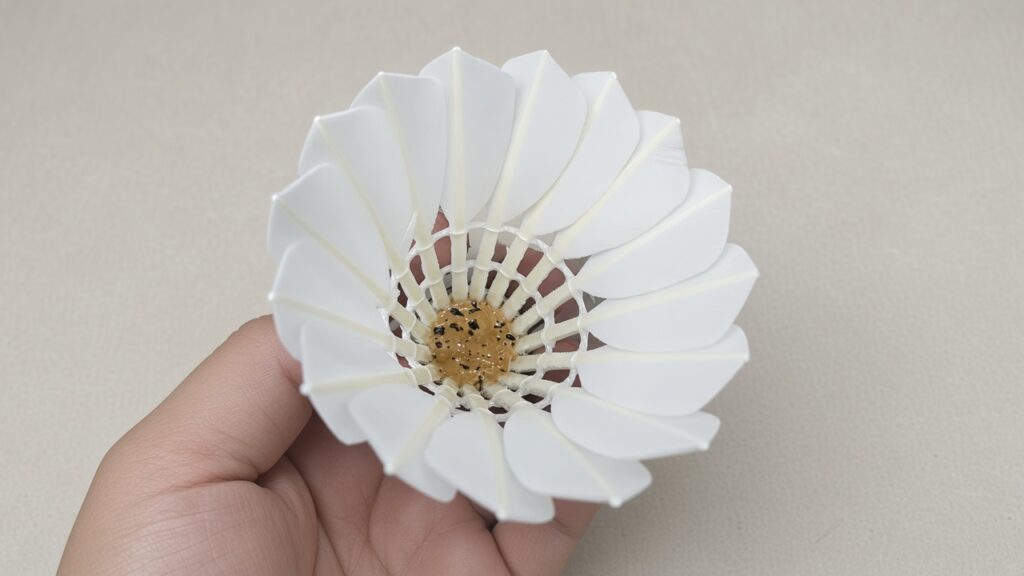
When the shuttlecock is hit, all 16 feathers must work together. If the glue, thread, or feather stems are not stable, the shuttlecock may wobble, drift, or lose speed consistency.
This is why drying and dehumidification are directly linked to flight performance.
The Role of Final Inspection After Drying
After drying and conditioning, shuttlecocks should go through inspection before packaging.
Common inspection points include:
- glue condition
- thread position
- feather alignment
- cone angle
- cork head surface
- shuttlecock weight
- appearance
- flight speed
- durability performance
For higher-grade shuttlecocks, flight testing is especially important.
The drying room prepares the shuttlecock for stable performance. Final inspection confirms whether that performance has been achieved.
Why Professional Factories Do Not Rush This Step
In low-cost production, some factories may shorten drying time to increase output speed.
This can reduce inventory pressure, but it also increases quality risk.
A professional feather shuttlecock factory understands that drying time is part of the manufacturing cost.
Good drying control helps reduce:
- customer complaints
- unstable batches
- loose feather problems
- broken feather issues
- inconsistent speed
- returns and replacements
For private label shuttlecock brands, stable quality is often more valuable than the lowest possible price.
A brand can survive a slightly higher cost. It cannot survive repeated quality complaints from clubs and players.
Final Thoughts
Drying and dehumidification may not be the most visible part of shuttlecock manufacturing, but it is one of the most important hidden processes.
After base glue and thread glue are applied, the shuttlecock needs time to stabilize. The drying room helps remove excess moisture, support glue curing, maintain feather flexibility, and protect the final cone structure.
For OEM shuttlecock buyers, this process explains why two shuttlecocks with similar feathers and similar cork bases can still perform differently.
A high-quality feather shuttlecock is not only made by good materials. It is made by controlled production from feather selection to insertion, gluing, thread binding, drying, testing, and packaging.
If you are looking for a reliable OEM shuttlecock manufacturer, do not judge only by price or appearance. Ask how the factory controls moisture, curing time, drying conditions, and final flight testing.
Because in feather shuttlecock production, stable flight begins long before the shuttlecock reaches the court.